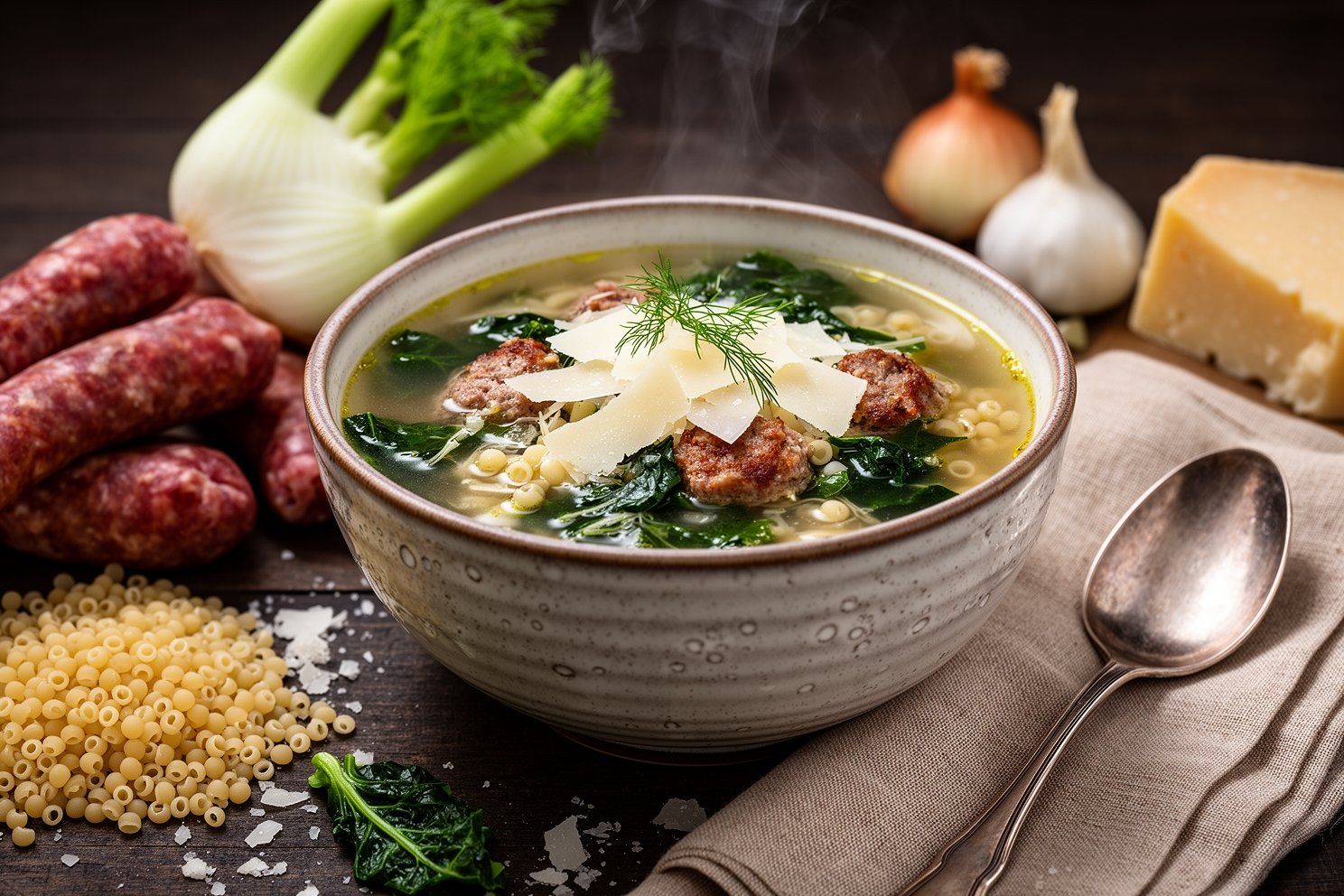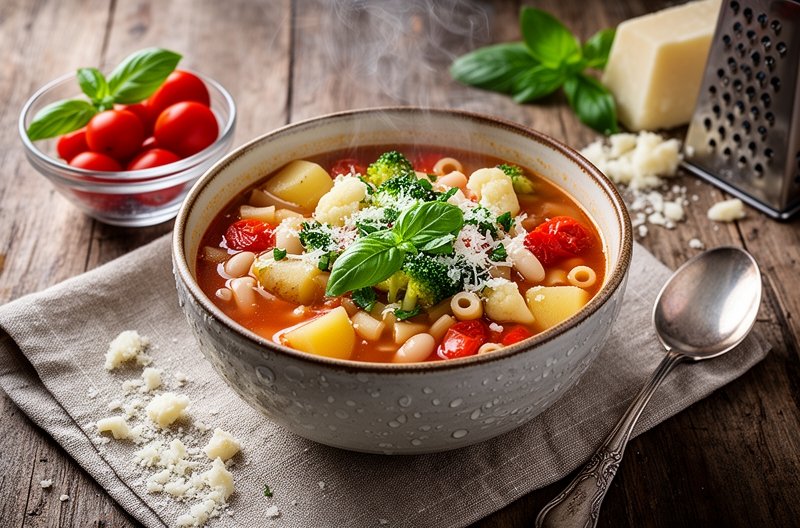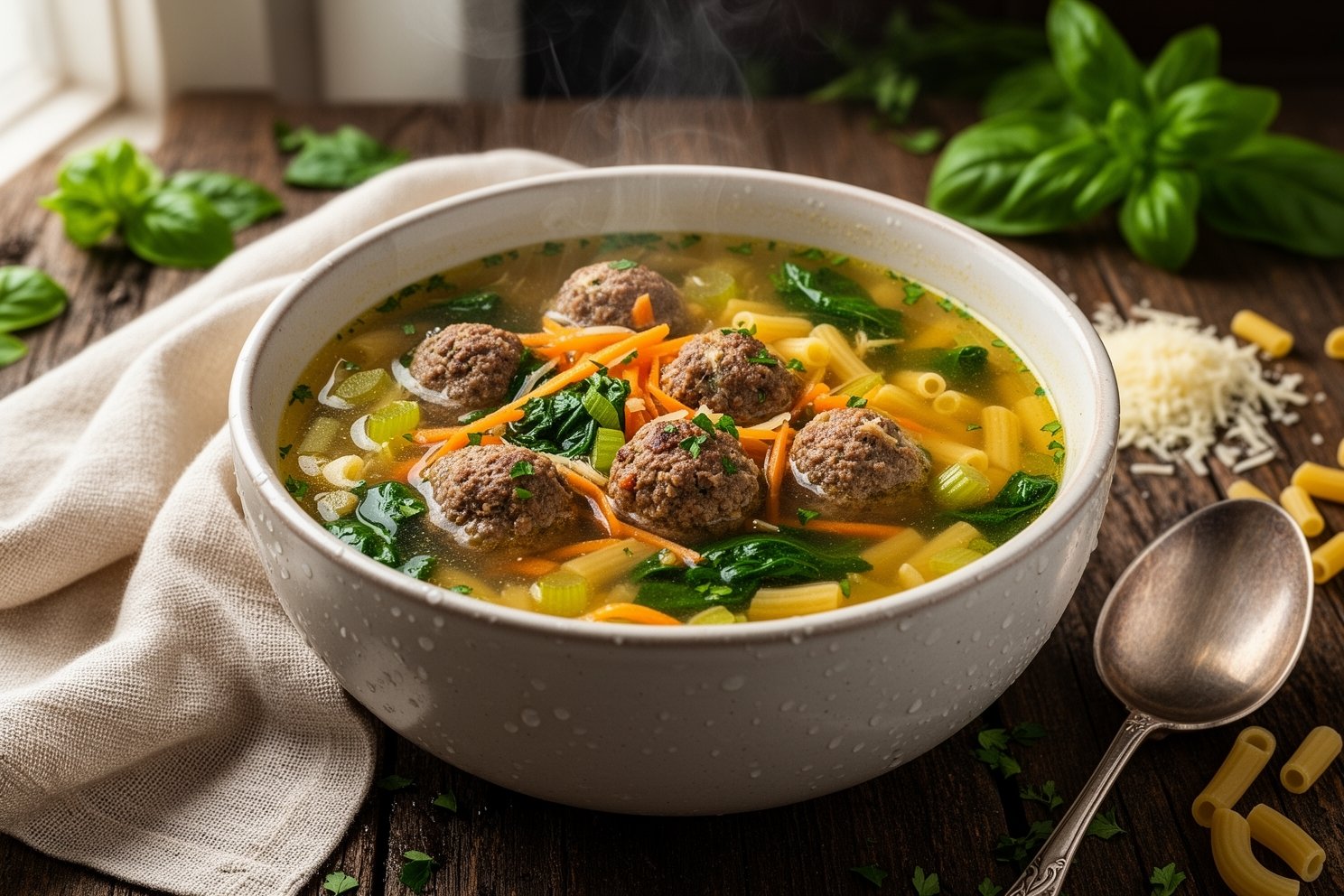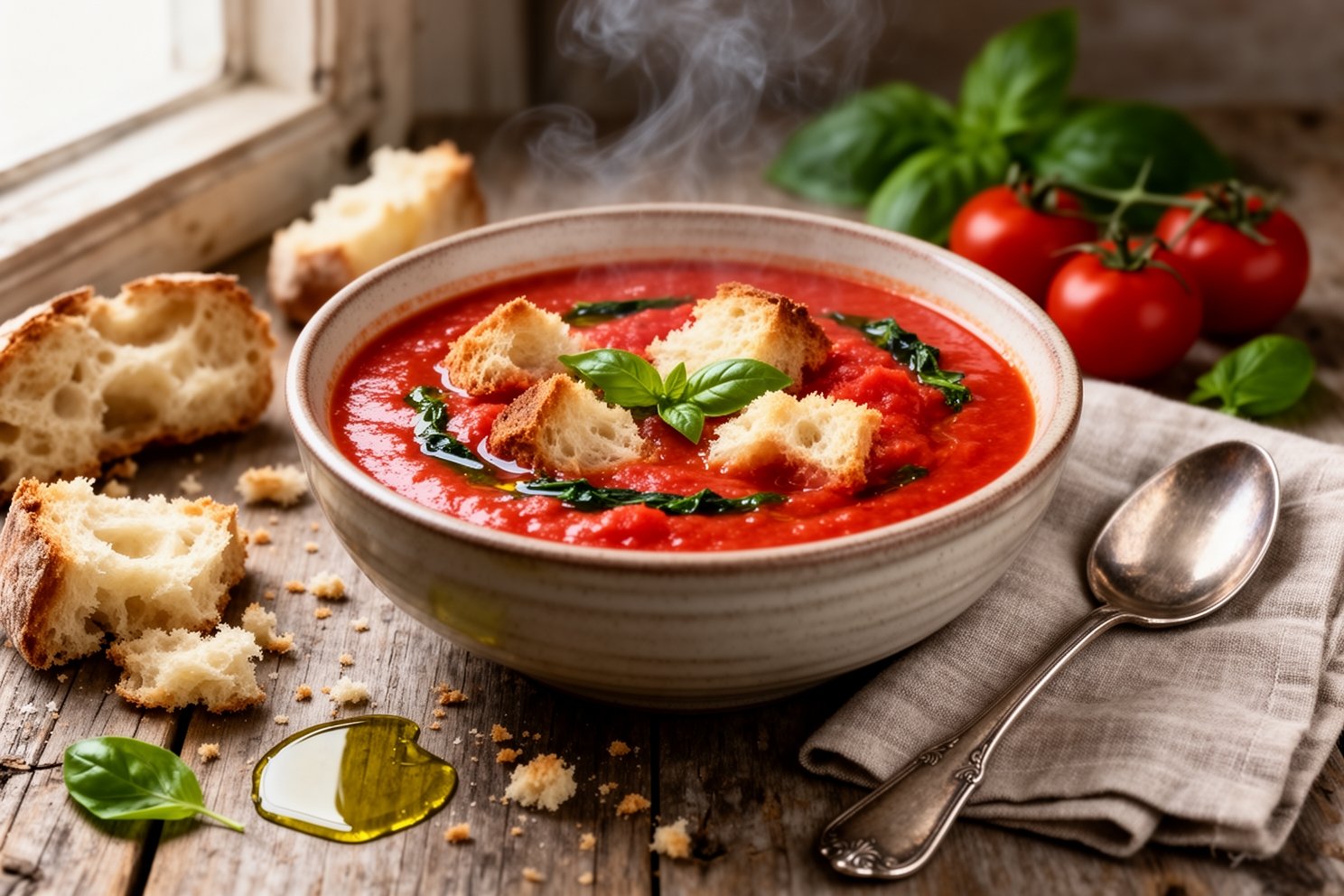

Zuppa di Verdure: A Tuscan Hearty Vegetable Stew for Longevity
Tuscan Vegetable Stew — A refined expression of Tuscany’s culinary heritage.
Traditionally crafted with cannellini beans and seasonal greens, this Gustoli-exclusive version is optimized for gut health and metabolic wellness.
Ready in 90 minutes, it seamlessly bridges authentic Italian tradition with modern nutritional excellence.
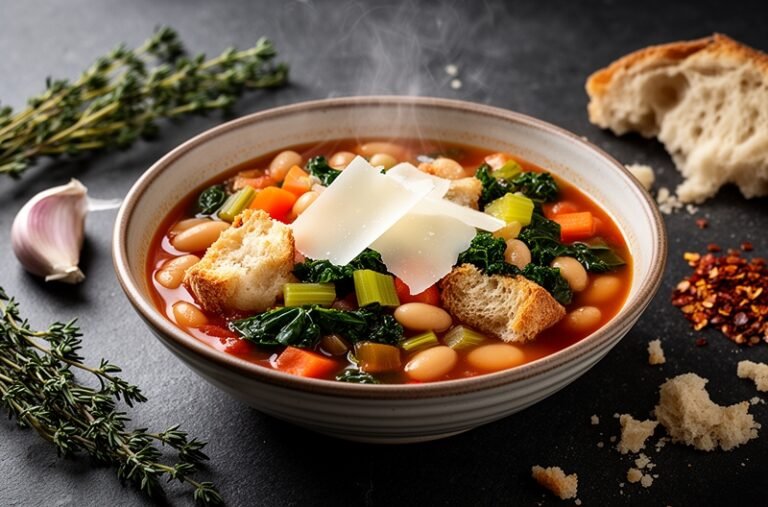
Beyond the Plate: The Story of Zuppa di Verdure: A Tuscan Hearty Vegetable Stew for Longevity
Mastering the Technique
A step-by-step guide to Italian perfection
The Artisan’s Pantry
Selecting the right components is 70% of the Italian culinary success. Here is what I’ve curated for this Zuppa di Verdure: A Tuscan Hearty Vegetable Stew for Longevity:
- Rustic artisanal sourdough bread (1/2 of a 1-pound loaf), day-old, torn into 2-inch pieces (about 6 cups) — [Pro-Tip: Day-old bread has less moisture and absorbs the rich stew broth beautifully, preventing it from becoming soggy too quickly.]
- Robust collard greens (1 bunch), center ribs and stems removed — [Pro-Tip: Remove the tough central ribs entirely for a more tender, enjoyable texture.]
- Deep green Tuscan kale (1 bunch, also known as cavolo nero), center ribs and stems removed — [Pro-Tip: A quick massage with a touch of olive oil can help soften the leaves and reduce bitterness before cooking.]
- Flaky sea salt — [Pro-Tip: Season in layers as you cook, tasting often. This prevents over-salting and ensures balanced flavor.]
- Liquid gold, cold-pressed extra virgin olive oil (1/2 cup, divided, plus more for serving) — [Pro-Tip: Choose a high-quality, fragrant oil. It’s the very soul of this Italian stew, adding depth and richness.]
- Sweet organic carrots (2 medium), peeled, finely diced — [Pro-Tip: Fine dicing ensures the carrots cook evenly and nearly dissolve into the savory broth, sweetening the base.]
- Crisp celery stalks (2), finely diced — [Pro-Tip: Along with carrots and leeks, celery forms the crucial *soffritto* base, building foundational flavor.]
- Tender leek (1), white and pale-green parts only, finely chopped — [Pro-Tip: Leeks can hide grit; slice them, then rinse thoroughly under cold water to clean every crevice.]
- Aromatic garlic cloves (4), finely minced — [Pro-Tip: Crush the cloves slightly with the side of your knife before mincing; this releases their pungent oils for maximum flavor.]
- A fiery kiss of Calabrian red pepper flakes (1/2 teaspoon) — [Pro-Tip: Adjust the quantity to your personal preference for heat. A little warmth awakens the other flavors.]
- Sun-ripened San Marzano whole peeled tomatoes (1 28-ounce can), drained — [Pro-Tip: Crushing the tomatoes by hand before adding them yields a perfectly rustic texture for the stew.]
- Rich, low-sodium vegetable broth (8 cups) — [Pro-Tip: While store-bought works, a homemade vegetable broth offers a superior, cleaner flavor profile.]
- Creamy Tuscan cannellini beans (3 15-ounce cans), rinsed thoroughly — [Pro-Tip: Rinse the beans well under cold water to remove any excess sodium and the starchy liquid from the can.]
- Fresh sprigs of fragrant thyme (4) — [Pro-Tip: Tie the thyme sprigs together with kitchen twine; this makes them easy to retrieve once their flavor has infused the stew.]
- Delicate marjoram or wild oregano sprig (1) — [Pro-Tip: Marjoram offers a slightly sweeter, milder note than oregano, both enhance the stew’s herbaceous profile.]
- Classic bay leaf (1) — [Pro-Tip: This aromatic leaf adds a subtle, almost minty depth; remember to remove it before serving.]
- Freshly ground black pepper — [Pro-Tip: Always grind your pepper fresh; the aroma and bite are incomparable to pre-ground versions.]
- Silky shaved Parmigiano Reggiano (for serving) — [Pro-Tip: Use a vegetable peeler to create delicate, elegant ribbons that melt beautifully into the warm stew.]
The Culinary Workflow
-
The Golden Soffritto Foundation
Begin by warming 1/4 cup of your exquisite extra virgin olive oil in a large, heavy-bottomed pot or Dutch oven over medium heat. Add the finely diced carrots, celery, and leeks to the shimmering oil.
Listen for the gentle sizzle as the vegetables begin to soften. Stir them often, allowing them to release their sweet essences and become tender, but not browned. This stage builds the aromatic soul of your stew, so patience is key.
My shortcut here is to cover the pot for the first few minutes after adding the *soffritto*. This traps steam, helping the vegetables soften more quickly and evenly before they even begin to take on color. It’s a trick for maximum sweetness.
-
Infusing the Aromatics
Once your *soffritto* is tender and translucent, introduce the minced garlic and red pepper flakes. Stir them into the softened vegetables, letting their potent aromas bloom in the warm oil.
Watch closely; the garlic should become fragrant, filling your kitchen with its delightful scent, but it must not burn. Burning garlic turns bitter, which would unfortunately compromise the entire stew’s flavor. This takes just about 60 seconds.
Alessia’s wisdom: Always add garlic and spices a moment *after* the initial vegetables. They have a higher sugar content and burn much faster. This staggered approach ensures every ingredient contributes its best without compromise.
-
Building Layers of Verdure and Broth
Now, add the hand-crushed San Marzano tomatoes, along with the fresh sprigs of thyme, marjoram or oregano, and the bay leaf. Stir everything together, allowing the tomatoes to meld with the aromatics. Pour in the rich vegetable broth.
Bring the mixture to a gentle simmer, then add the robust collard greens and Tuscan kale. They will seem voluminous at first, but watch as they gracefully wilt and surrender to the warmth of the broth, their deep green hues intensifying. For a truly authentic experience, consider exploring traditional Italian soups and stews to further your culinary journey.
To ensure tender greens, I often add them in batches, allowing each addition to wilt down before adding more. This ensures uniform cooking and keeps the pot from overflowing. This gradual integration helps maintain the rich texture of the stew.
-
The Gentle Simmer and Rustic Perfection
Reduce the heat to low, cover the pot, and let your Zuppa di Verdure simmer gently for at least 30 minutes. This slow cooking allows all the flavors to deepen and intertwine, and the greens to become wonderfully tender.
After 30 minutes, stir in the creamy cannellini beans. Continue to simmer, uncovered, for another 10-15 minutes. The broth will thicken slightly, and the beans will become infused with the stew’s character. Taste and adjust the seasoning with flaky sea salt and freshly ground black pepper.
Just before serving, stir in the torn sourdough bread pieces. They should cook for just 3-5 minutes, enough to soften and absorb the incredible broth without becoming mushy. This creates a wonderfully rustic texture. This recipe is a perfect example of our collection of nourishing vegetable mains.
-
The Final Touch
Remove the herb sprigs and bay leaf. Ladle the hearty stew into warm bowls. Drizzle generously with your remaining cold-pressed extra virgin olive oil.
Finally, crown each serving with elegant shavings of Parmigiano Reggiano. The salty, nutty cheese melts slightly from the warmth, adding a luxurious finish to this humble dish. Serve immediately and savor the rich, comforting flavors.
I find that a fresh sprig of parsley or a basil leaf, finely chopped and sprinkled on top, adds a burst of freshness that brightens the entire dish, providing a delightful contrast to the stew’s deep flavors. It’s truly a testament to delightful vegetarian cuisine.
Alessia’s Expert Secrets
For a truly velvety texture in your Zuppa, use a potato masher or the back of a wooden spoon to gently crush some of the cannellini beans against the side of the pot. This releases their starch, naturally thickening the stew and adding a creamy mouthfeel without any dairy. It’s a subtle technique that makes a big difference.
This hearty stew sings alongside a robust Tuscan Chianti or a crisp Vermentino. For a side, nothing beats additional slices of a truly exceptional artisan Italian bread, perfect for soaking up every last drop of the rich broth. A simple side salad with a bright vinaigrette also offers a lovely, refreshing contrast.
Recipe Insights & Tips
Why are cannellini beans essential for this dish?
Cannellini beans are a cornerstone of Tuscan cuisine. Their creamy texture and mild, earthy flavor are perfect for absorbing the robust flavors of the vegetables and broth. Beyond taste, they provide a powerful nutritional punch: rich in plant-based protein and dietary fiber, they contribute to the stew’s heartiness and satiety, making it a complete and nourishing meal.
How does this fit into a Longevity diet?
This Zuppa di Verdure perfectly embodies the principles of a Mediterranean-inspired longevity diet. It is packed with fiber from the beans and diverse greens, providing essential prebiotics for gut health. The generous use of extra virgin olive oil offers healthy monounsaturated fats, while the abundance of vegetables ensures a wide array of antioxidants and vitamins. This combination supports metabolic wellness, reduces inflammation, and promotes overall vitality.
Kcal
Wellness & Longevity Note
This Tuscan Vegetable Stew is a nutritional powerhouse, meticulously crafted for optimal wellness. Each serving delivers a significant boost of dietary fiber from the cannellini beans, collard greens, and kale, essential for digestive health and stable blood sugar levels. The medley of vibrant vegetables contributes a spectrum of vitamins (A, C, K) and minerals, along with potent antioxidants that combat oxidative stress. Cold-pressed extra virgin olive oil provides heart-healthy monounsaturated fats, known for their anti-inflammatory properties. This balanced, plant-forward meal supports cardiovascular health, promotes satiety, and aligns beautifully with a holistic approach to longevity.