
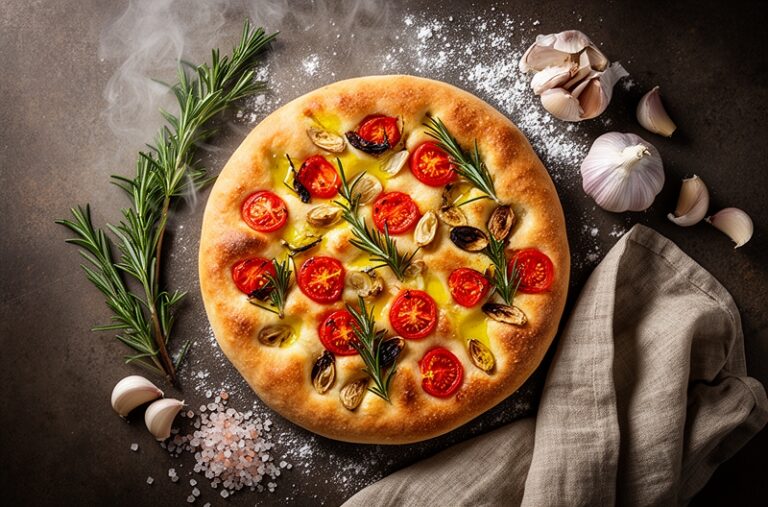
The Roman Dawn Focaccia: Rosemary, Sun-Kissed Tomato & Garlic Infusion
Rosemary Tomato Garlic Focaccia — A refined expression of Lazio’s culinary heritage.
Traditionally crafted with finest Italian flour and aromatic rosemary, this Gustoli-exclusive version is optimized for metabolic wellness.
Ready in 150 minutes, it seamlessly bridges authentic Italian tradition with modern nutritional excellence.
Beyond the Plate: The Story of Roman Dawn Focaccia
Mastering the Technique
A step-by-step guide to Italian perfection
The Artisan’s Pantry
Selecting the right components is 70% of the Italian culinary success. Here is what I’ve curated for this Roman Dawn Focaccia:
- 400 grams Finest Italian ‘Tipo 0’ Bread Flour — [Pro-Tip: Ensure it’s fresh and unbleached for optimal gluten development and a superior crumb structure.]
- 270 grams Pure, Warm Mineral Water — [Pro-Tip: Aim for a temperature around 38-40°C (100-105°F) to gently awaken the yeast without killing it.]
- 3 grams Active Dry Yeast Granules — [Pro-Tip: Always check the expiration date. A vigorous yeast ensures a beautiful rise and airy texture.]
- 12 grams Flaky Mediterranean Sea Salt — [Pro-Tip: Incorporate after the yeast and flour have begun to combine, as direct contact can hinder yeast activation.]
- A generous drizzle of First-Press Extra Virgin Olive Oil — [Pro-Tip: Choose a high-quality, cold-pressed oil from Puglia or Tuscany for its robust flavor and golden hue.]
- One Ripe, Sun-Kissed Roma Tomato, finely sliced — [Pro-Tip: Select a firm, vibrant red tomato. Slice it thinly to allow its juices to infuse the focaccia without making it soggy.]
- A small bunch of Freshly Gathered Roman Rosemary Sprigs — [Pro-Tip: Bruise the sprigs slightly between your fingers to release their essential oils before scattering them.]
- Three Fragrant Umbrian Garlic Cloves, thinly sliced — [Pro-Tip: For a milder flavor, you can roast the garlic lightly before slicing; otherwise, thinly slice raw for a pungent burst.]
The Culinary Workflow
-
The Dough’s Genesis: Mixing & Initial Knead
In a large bowl, combine the finest Italian bread flour with the warm mineral water and yeast. Stir gently until a shaggy, wet dough forms. This initial mixing is crucial; it starts the hydration process without overworking the gluten.
Observe the mixture. It should be sticky and rather unformed. This stage is about bringing the raw elements together, letting them begin their magical transformation. You are awakening the ingredients.
My shortcut here is minimal effort: don’t strive for perfection initially. Simply cover the bowl with a damp cloth and let it rest for 15 minutes. This autolyse period allows the flour to fully hydrate, making subsequent handling much easier. This is also a wonderful addition to our collection of Vegan recipes.
-
The Slow Awakening: First Rise & Folding
Now, add the flaky Mediterranean sea salt and a tablespoon of first-press extra virgin olive oil to the dough. Using wet hands, gently fold the dough from the edges into the center, rotating the bowl a quarter turn with each fold. Repeat this process for about 2-3 minutes.
Feel the dough transform under your fingers. It will become smoother, more elastic, and less sticky. The oil provides lubrication and flavor, while the salt strengthens the gluten network. Listen for the gentle ‘slap’ as the dough releases from the bowl.
Here’s a trick for a truly exceptional focaccia: after these initial folds, cover the bowl and refrigerate the dough for at least 8 hours, or ideally overnight. This slow, cold fermentation develops incredible flavor and texture, making the focaccia more digestible.
-
The Flavor Infusion: Preparing the Toppings
While your dough slowly ferments, prepare your toppings. Finely slice the ripe Roma tomato. Gently pull the leaves from the fresh Roman rosemary sprigs. Thinly slice the fragrant Umbrian garlic cloves.
The visual appeal of these vibrant toppings is as important as their taste. See the deep red of the tomato, the emerald green of the rosemary, and the pearly white of the garlic. Inhale their combined aromas; this is the essence of Mediterranean cooking.
Alessia’s tip: lightly toss the sliced tomatoes and garlic with a touch of extra virgin olive oil and a tiny pinch of sea salt. This pre-seasoning helps them release their flavors beautifully into the focaccia as it bakes.
-
The Final Ascent & Adornment: Second Rise & Dimpling
Once your dough has completed its cold fermentation, bring it to room temperature for about an hour. Generously coat a 9×13 inch baking tray with first-press extra virgin olive oil. Carefully transfer the dough to the tray. Gently stretch it to fill the pan, being careful not to deflate it.
Allow the dough to rest for another 30 minutes. Then, using your oiled fingertips, create deep dimples across the entire surface of the focaccia. These dimples are essential for its characteristic texture and to hold the toppings and oil.
This is where the artistry comes alive. After dimpling, generously drizzle more olive oil over the top, pushing it into the depressions. Scatter the sliced tomatoes, rosemary, and garlic evenly. Let it rise, covered, for its final hour in a warm place, until visibly puffy.
-
The Golden Embrace: Baking
Preheat your oven to 220°C (425°F). Place a shallow pan of water on the bottom rack of your oven to create steam. This ensures a wonderfully crisp crust.
Slide the focaccia into the preheated oven. Watch closely as the crust begins to turn a beautiful golden-brown, and the aromas fill your kitchen. The edges will become irresistibly crisp, and the toppings will gently caramelize.
Bake for 20-25 minutes, or until deeply golden and cooked through. Once out of the oven, give it a final, delicate drizzle of extra virgin olive oil for that quintessential Italian sheen and flavor. Let it cool slightly on a wire rack before slicing and serving. It’s truly divine, perfect as an Antipasti.
Alessia’s Expert Secrets
The key to focaccia’s perfect chew and crisp exterior lies in two things: the high hydration of the dough and the deep dimpling technique. Don’t be shy with the olive oil in the pan and on top; it’s what gives it that signature golden, almost fried crust and prevents sticking.
This focaccia sings alongside a crisp, chilled Vermentino or a light Lambrusco. For a complete meal, serve it with a vibrant caprese salad or as an accompaniment to a simple, grilled fish. The fresh, bright flavors demand a refreshing counterpart.
Recipe Insights & Tips
Why is high-quality extra virgin olive oil essential for this dish?
Extra virgin olive oil is the soul of focaccia. Beyond its flavor contribution, it creates a barrier that helps achieve that desirable crisp exterior while keeping the interior tender. Chemically, its monounsaturated fats contribute to the focaccia’s moistness and unique aroma during baking. Always choose a first-press oil for the best results.
How does this fit into a Longevity diet?
This Roman Dawn Focaccia aligns perfectly with a longevity diet. It utilizes whole grain flour (if using Tipo 0, it’s less refined than all-purpose), healthy monounsaturated fats from olive oil, and potent antioxidants from rosemary, garlic, and tomato. It’s a naturally Vegan and unprocessed bread, promoting heart health and overall metabolic wellness as part of a balanced Mediterranean lifestyle.
Kcal
Wellness & Longevity Note
This focaccia is a testament to the power of simple, natural ingredients. Each serving offers a balanced profile of complex carbohydrates, heart-healthy fats, and a wealth of phytonutrients from the fresh herbs and vegetables. Rosemary is known for its anti-inflammatory properties, while garlic and tomatoes provide antioxidants beneficial for cellular health. With its low-fat and sugar-conscious profile, this recipe offers indulgent flavor without compromising your wellness goals, embodying the Gustoli philosophy of delicious, health-conscious Italian living.