
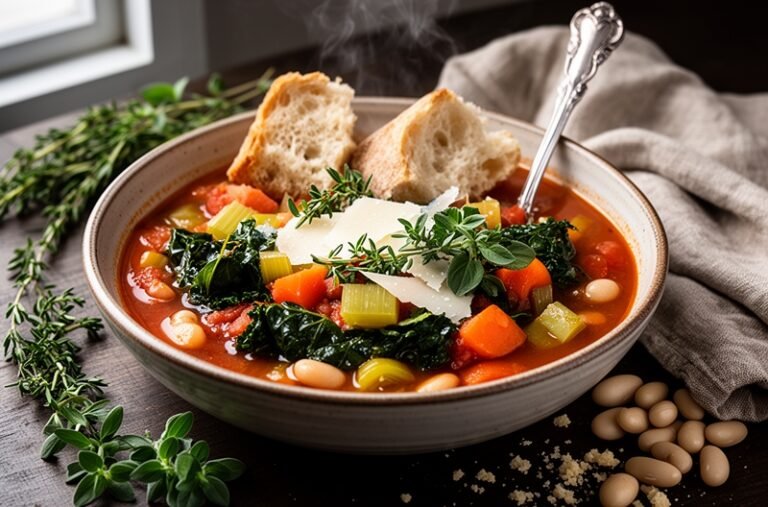
The Hearty Tuscan Garden Stew: A Roman-Inspired Longevity Masterpiece
Tuscan Garden Stew — A refined expression of Tuscany’s culinary heritage.
Traditionally crafted with seasonal vegetables and hearty cannellini beans, this Gustoli-exclusive version is optimized for digestive wellness and sustained energy.
Ready in 70 minutes, it seamlessly bridges authentic Italian tradition with modern nutritional excellence.
Beyond the Plate: The Story of Tuscan Garden Stew
Mastering the Technique
A step-by-step guide to Italian perfection
The Artisan’s Pantry
Selecting the right components is 70% of the Italian culinary success. Here is what I’ve curated for this Tuscan Garden Stew:
- Six cups of rustic, artisanal sourdough bread, hand-torn into generous 2-inch pieces. — [Pro-Tip: A day-old loaf toasts best.]
- One generous bunch of vibrant collard greens, thoroughly washed, with tough center ribs and stems meticulously removed. — [Pro-Tip: Slice thin for quicker tenderizing.]
- One bunch of earthy Tuscan kale (cavolo nero), destemmed and torn. — [Pro-Tip: Massage with olive oil for tenderness.]
- A generous pinch of coarse sea salt. — [Pro-Tip: Season as you go, tasting often.]
- Half a cup of exquisite cold-pressed extra virgin olive oil, divided, plus extra for a luxurious drizzle. — [Pro-Tip: Finish with a fresh drizzle for aroma.]
- Two medium, sweet carrots, meticulously peeled and finely diced. — [Pro-Tip: Uniform dice ensures even cooking.]
- Two crisp celery stalks, finely chopped. — [Pro-Tip: Essential for the aromatic base.]
- One medium leek, using only the tender white and pale-green sections, thoroughly cleaned and chopped. — [Pro-Tip: Rinse well to remove hidden grit.]
- Four plump cloves of fresh garlic, finely minced. — [Pro-Tip: Add late to prevent burning.]
- A delicate half teaspoon of spicy crushed red pepper flakes. — [Pro-Tip: Adjust heat to your preference.]
- One 28-ounce can of premium whole peeled San Marzano tomatoes, carefully drained and hand-crushed. — [Pro-Tip: Their natural sweetness is unmatched.]
- Eight cups of rich, low-sodium vegetable broth. — [Pro-Tip: A quality broth elevates the entire dish.]
- Three 15-ounce cans of creamy cannellini (white kidney) beans, thoroughly rinsed and drained. — [Pro-Tip: Rinsing improves texture and reduces sodium.]
- Four aromatic sprigs of fresh thyme. — [Pro-Tip: Whole sprigs infuse flavor deeply.]
- One sprig of fresh marjoram or wild oregano. — [Pro-Tip: Fresh herbs brighten every bite.]
- A single, fragrant bay leaf. — [Pro-Tip: Adds subtle, savory depth; remember to remove it.]
- A generous grinding of freshly cracked black pepper. — [Pro-Tip: Always grind fresh for intensity.]
- A showering of freshly shaved Pecorino Romano or Parmigiano Reggiano (for an authentic finish). — [Pro-Tip: Use a vegetable peeler for delicate, melt-in-your-mouth shavings.]
The Culinary Workflow
-
The Flavor Foundation
Begin by heating a quarter cup of your finest extra virgin olive oil in a substantial, heavy-bottomed pot over a medium flame. Once shimmering, introduce the finely diced carrots, celery, and leek. Sauté these aromatic vegetables, known as the soffritto, with a pinch of coarse sea salt, stirring frequently.
Watch as the vegetables slowly release their moisture, becoming tender and translucent. Listen for the gentle hiss, not a fierce sizzle, which tells you the heat is perfect for coaxing out their sweet, earthy essence. The aroma will begin to fill your kitchen, a comforting promise of the flavors to come.
Here’s a trick I learned from my nonna: resist the urge to rush this step. Allowing the soffritto to truly soften is the secret to a deeply flavorful stew. If they start to catch, add a tablespoon of water, not more oil, to deglaze the pan gently.
-
Building Depth with Tomatoes and Spice
Now, introduce the minced garlic and the crushed red pepper flakes to the softened soffritto. Stir them continuously for just about one minute, allowing their aromas to bloom. Next, add the hand-crushed San Marzano tomatoes and stir well, coating all the vegetables evenly.
The garlic will become incredibly fragrant, a sharp, sweet note cutting through the background of cooked vegetables. The red pepper flakes will release a subtle, peppery perfume. As the tomatoes hit the hot pan, their vibrant acidity will immediately start to mellow, transforming into a rich, sweet base that promises a hearty depth.
To enhance the tomato’s sweetness, I sometimes add a small pinch of sugar or even a tiny splash of balsamic glaze right after adding them. This intensifies their natural sugars and helps balance the acidity, creating a more harmonious flavor profile.
-
The Gentle Simmer
Pour in the eight cups of rich, low-sodium vegetable broth. Add the rinsed cannellini beans, the fresh thyme sprigs, marjoram/oregano, and the bay leaf. Bring the stew to a gentle simmer, then reduce the heat to low, cover the pot, and let it cook for at least 30 minutes, or up to an hour.
The stew should just gently burble, a quiet whisper rather than a rolling boil, allowing all the flavors to marry slowly and deeply. The kitchen will be infused with a rich, savory aroma, a symphony of herbs and vegetables. The broth will thicken subtly, coating the back of your spoon, signaling its growing richness.
For an even creamier stew, particularly if you want to enhance the “body,” you can remove about a cup of the stewed beans and a little broth after simmering, blend them until smooth, then stir them back into the pot. This creates a natural thickening without adding any flour or starch.
-
The Verdant Finish & Serving
Stir in the destemmed collard greens and Tuscan kale. Continue to simmer, uncovered, for another 10-15 minutes, or until the greens are tender but still retain a vibrant green hue. Remove and discard the herb sprigs and bay leaf. Season generously with freshly ground black pepper and adjust the coarse sea salt to your taste.
Watch as the robust greens wilt into the hot broth, their deep green color contrasting beautifully with the rich red of the tomatoes and the white of the beans. The stew will thicken slightly more, its texture becoming lusher. Taste frequently, seeking that perfect balance of salt, sweetness, and a hint of peppery warmth.
Before serving, I always toast the hand-torn sourdough pieces lightly in a pan with a touch more olive oil until golden and crisp. Arrange them in individual bowls, ladle over the piping hot Tuscan Garden Stew, and finish with a generous drizzle of that exquisite extra virgin olive oil and a shower of freshly shaved Pecorino Romano. This bread is essential to soak up every last drop!
Alessia’s Expert Secrets
To achieve a stew that is both chunky and velvety, I slightly mash a portion of the cannellini beans against the side of the pot as the stew simmers. This releases their starch, thickening the broth naturally and creating a luxurious mouthfeel without making it pasty.
This robust stew begs for a light-bodied red wine, perhaps a Chianti Classico, with its earthy notes and bright acidity. For a non-alcoholic pairing, a sparkling water with a slice of lemon offers a refreshing contrast. Serve with additional slices of artisan Italian bread for dipping.
Recipe Insights & Tips
Why are Cannellini beans essential for this dish?
Cannellini beans are crucial not just for their creamy texture and mild, earthy flavor, but also for their incredible ability to enrich the stew. They absorb the flavors of the broth and vegetables while also naturally thickening the stew as they break down slightly, adding both body and a satisfying protein boost.
How does this fit into a Longevity diet?
This stew is a cornerstone of the Mediterranean diet, lauded for its longevity benefits. It’s packed with fiber from the beans and leafy greens, promoting gut health and steady blood sugar. The healthy fats from olive oil support heart health, while the abundance of antioxidants from the vegetables helps combat inflammation, embodying a truly nourishing meal.
Kcal
Wellness & Longevity Note
This Tuscan Garden Stew is a celebration of whole, unprocessed ingredients. Each serving is rich in plant-based protein, complex carbohydrates, and essential micronutrients. The high fiber content supports digestive regularity and satiety, making it an excellent choice for maintaining a healthy weight. Loaded with vitamins K, A, and C from the greens and antioxidants from the tomatoes and garlic, it’s a powerhouse meal designed to fuel your body with sustained energy and contribute to overall vitality, echoing the principles of a long and healthy Italian life.