
Sapore Rustico: Roman Roasted Vegetables, Artisanal Sausage & Corkscrew Pasta – A Hearty Roman Feast
Roasted Vegetable and Italian Sausage Pasta — A refined expression of Lazio’s culinary heritage.
Traditionally crafted with sun-kissed vegetables and rich Italian sausage, this Gustoli-exclusive version is optimized for wholesome heart health and robust fiber intake.
Ready in 65 minutes, it seamlessly bridges authentic Italian tradition with modern nutritional excellence.
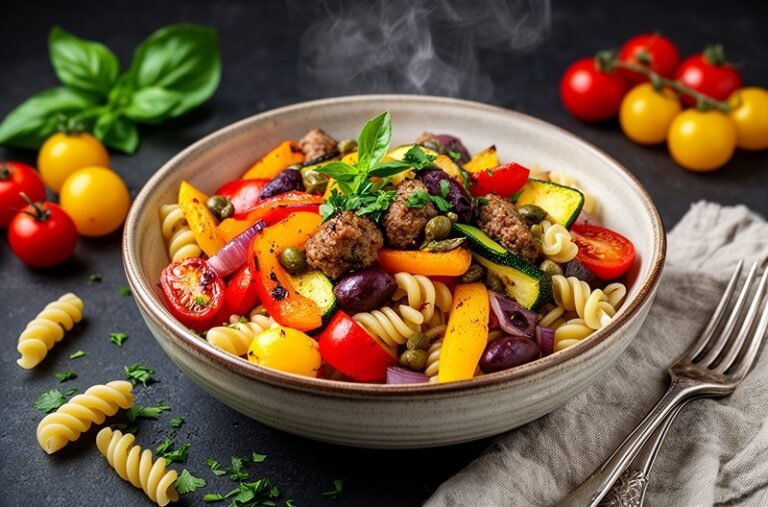
Beyond the Plate: The Story of Roman Roasted Vegetable and Artisanal Sausage Pasta
Mastering the Technique
A step-by-step guide to Italian perfection
The Artisan’s Pantry
Selecting the right components is 70% of the Italian culinary success. Here is what I’ve curated for this Roman Roasted Vegetable and Artisanal Sausage Pasta:
- Three cups of sun-drenched grape tomatoes — [Pro-Tip: A mix of red and yellow varieties adds visual vibrancy and a nuanced sweetness.]
- One brilliant red bell pepper — [Pro-Tip: Cut into uniform 1-inch pieces for even roasting and a beautiful mosaic of color.]
- One golden yellow bell pepper — [Pro-Tip: Similar to the red pepper, uniform sizing is key for consistent texture.]
- One vibrant orange bell pepper — [Pro-Tip: These add another layer of color and a slightly different sweet note when roasted.]
- One medium green zucchini, precisely sliced — [Pro-Tip: Slice vertically into planks, then crosswise into 1/2-inch crescent moons; this cut holds its shape beautifully after roasting.]
- One medium sun-kissed yellow squash, precisely sliced — [Pro-Tip: Similar to the zucchini, consistent slicing ensures even tenderness and prevents mushiness.]
- One small crimson red onion, artfully chunked — [Pro-Tip: Cutting into substantial 1-inch chunks ensures the onion caramelizes rather than burns during roasting.]
- Three cloves of pungent garlic, finely minced — [Pro-Tip: Mince just before adding to preserve its sharp, aromatic oils. Avoid pre-minced garlic for optimal flavor.]
- One teaspoon of fragrant dried basil — [Pro-Tip: Rub dried herbs between your palms before sprinkling; this releases their essential oils and amplifies their aroma.]
- One teaspoon of earthy fennel seed — [Pro-Tip: Lightly crush the seeds in a mortar and pestle or with the back of a spoon to unlock their sweet, anise-like essence.]
- One teaspoon of aromatic dried oregano — [Pro-Tip: Opt for Mediterranean oregano; its bolder flavor perfectly complements the rustic notes of this dish.]
- A quarter teaspoon of fiery red pepper flakes — [Pro-Tip: Adjust to your preference for heat; a slight warmth enhances, rather than overwhelms, the other flavors.]
- Three tablespoons of cold-pressed extra virgin olive oil — [Pro-Tip: Use a high-quality, robust olive oil that can withstand the heat of roasting and still impart its peppery notes.]
- Three-quarters teaspoon of flaky sea salt — [Pro-Tip: Kosher or sea salt crystals provide a clean, mineral taste and distribute more evenly than fine table salt.]
- Half teaspoon of freshly cracked black pepper — [Pro-Tip: Grind fresh pepper; its volatile compounds rapidly dissipate once ground, so fresh is always best.]
- One pound of artisanal Italian sausage, casings removed, generously chunked — [Pro-Tip: Choose a high-quality pork or chicken sausage; removing the casings allows for beautiful browning and flavor release.]
- One pound of Italian artisanal corkscrew pasta (Fusilli) — [Pro-Tip: The spirals of fusilli are perfect for capturing the roasted vegetable juices and sausage crumbles. Look for bronze-die extruded pasta for superior sauce adhesion. Explore our curated artisanal pasta collection for the perfect pairing.]
- Half cup of briny Kalamata olives, pitted and halved — [Pro-Tip: Halve the olives to distribute their rich, salty tang throughout the dish; rinsing reduces excess sodium.]
- Two tablespoons of brined capers, rinsed and drained — [Pro-Tip: Capers add a bright, salty pop. Rinsing removes excessive brine, balancing their intensity.]
- One tablespoon of bold red wine vinegar — [Pro-Tip: A splash of vinegar at the end brightens and balances the rich flavors, adding a crucial acidic lift.]
- Two tablespoons of freshly chopped Italian flat-leaf parsley — [Pro-Tip: Parsley offers a fresh, herbaceous finish; chop it finely just before serving to maintain its vivid green color and crisp flavor.]
- Two tablespoons of fragrant fresh basil leaves, finely shredded — [Pro-Tip: Add fresh basil right at the end; its delicate oils are easily destroyed by heat, so preserve its vibrant aroma and taste.]
**Alessia’s Gustoli Tweak:** I always introduce a touch of red wine vinegar right at the end. This brightens the rich, savory notes of the sausage and roasted vegetables, creating a more balanced and dynamic flavor profile, a true Roman secret for depth.
The Culinary Workflow
-
The Roman Harvest Roast: Caramelizing the Vegetables
Preheat your oven to 400°F (200°C). On a large baking sheet, combine the sun-drenched grape tomatoes, all three vibrant bell peppers, precisely sliced zucchini and yellow squash, and the artfully chunked crimson red onion. Drizzle generously with two tablespoons of cold-pressed extra virgin olive oil, then sprinkle with fragrant dried basil, earthy fennel seed, aromatic dried oregano, fiery red pepper flakes, flaky sea salt, and freshly cracked black pepper. Toss everything gently with your hands to ensure an even coating.
Spread the vegetables into a single layer, ensuring they are not crowded. Listen for the gentle hiss as they begin to soften in the heat. Watch closely as the edges of the bell peppers begin to char slightly, and the tomatoes burst, releasing their sweet juices. This caramelization is crucial, developing deep, complex flavors.
My secret for truly magnificent roasted vegetables is a hot oven and enough space. If your baking sheet is too full, use two. Crowding steams the vegetables instead of roasting them, robbing them of that beautiful, charred sweetness. Roast for about 20-25 minutes, or until tender and lightly caramelized. Halfway through, give them a gentle toss to promote even browning.
-
Sizzling the Salsiccia: Building the Hearty Base
While the vegetables roast, bring a large pot of salted water to a rolling boil for your pasta. In a substantial, heavy-bottomed skillet or Dutch oven, heat the remaining tablespoon of cold-pressed extra virgin olive oil over medium-high heat. Add the generously chunked artisanal Italian sausage, breaking it apart with a wooden spoon as it cooks.
Listen for the satisfying sizzle as the sausage hits the hot pan. You want a vigorous sizzle, not a gentle simmer. Watch for a deep, golden-brown crust to form on each piece. This rich color signifies the Maillard reaction, locking in intense savory flavors. Cook until the sausage is fully browned and cooked through, about 8-10 minutes.
I always ensure the pan is truly hot before adding the sausage. This creates that irresistible crust and prevents the sausage from stewing in its own juices. Once browned, remove the sausage with a slotted spoon, leaving behind the precious rendered fat and flavorful fond in the pan. This flavorful residue is gold for our sauce base.
-
The Grand Unification: Marrying Flavors with Pasta
Add the finely minced pungent garlic to the skillet with the reserved sausage drippings. Sauté for about 30 seconds until intensely fragrant, being careful not to burn it. Cook the Italian artisanal corkscrew pasta in the boiling salted water according to package directions until perfectly al dente. Reserve about a cup of the starchy pasta water, which is a chef’s secret for emulsifying sauces.
The moment the garlic hits the warm oil, a wave of intoxicating aroma will fill your kitchen. It should smell sweet and pungent, not acrid. When the pasta is al dente, it should have a slight bite – firm to the tooth, but not hard.
For an extra layer of flavor and to deglaze the pan, I often pour a splash of red wine or even a little chicken broth into the skillet after the garlic has softened. Scrape up all those delicious browned bits from the bottom. Then, return the roasted vegetables, cooked sausage, pitted Kalamata olives, and brined capers to the skillet. Toss gently to combine. Add the cooked pasta and a generous splash of the reserved pasta water. Stir well, allowing the starchy water to create a silky, cohesive sauce that clings beautifully to every piece. Finally, stir in the bold red wine vinegar, freshly chopped Italian flat-leaf parsley, and fragrant fresh basil leaves. Serve immediately.
Alessia’s Expert Secrets
To achieve a perfect mouthfeel, roast vegetables until they are tender-crisp – soft, but with a slight resistance. For the pasta, cook precisely al dente; it should have a pleasant chew that contrasts beautifully with the yielding vegetables and meaty sausage.
This robust dish calls for a wine that can stand up to its rich flavors. A medium-bodied Sangiovese or a rustic Montepulciano d’Abruzzo would be an ideal companion. For a lighter touch, a crisp, peppery arugula salad with a simple lemon vinaigrette offers a refreshing counterpoint.
Recipe Insights & Tips
Why is Fennel-Kissed Italian Sausage essential for this dish?
Italian sausage, especially with its characteristic fennel, provides a robust, savory foundation. Its fat renders during cooking, creating a flavorful base for the sauce, while the spices within infuse the entire dish with a distinctive warmth and complexity that is quintessentially Italian.
How does this fit into a Longevity diet?
This recipe is a stellar example of the Mediterranean diet. It’s rich in fiber from the abundance of roasted vegetables and whole grain pasta (if chosen), packed with antioxidants, and offers lean protein from the sausage. The use of high-quality olive oil contributes healthy monounsaturated fats, all contributing to overall wellness and supporting a vibrant, long life. It’s truly a quick and nourishing family meal.
Kcal
Wellness & Longevity Note
This Roman Roasted Vegetable and Artisanal Sausage Pasta is a nutritional powerhouse. The 3899 Kcal represent the total for 6 generous servings, making each portion approximately 650 Kcal – a substantial and satisfying meal. It delivers significant dietary fiber from the roasted bell peppers, zucchini, squash, and tomatoes, which is vital for digestive health and satiety. The lean Italian sausage provides a generous amount of high-quality protein, essential for muscle maintenance and repair. Furthermore, the dish is rich in antioxidants from the colorful vegetables, contributing to cellular protection and inflammation reduction, aligning perfectly with longevity principles. The judicious use of extra virgin olive oil offers heart-healthy monounsaturated fats. It’s a balanced meal designed not just for exquisite taste, but for enduring well-being.