
Vibrant Giambotta: The Essential Italian Vegetable Stew
Italian Giambotta is a traditional Italian dish from
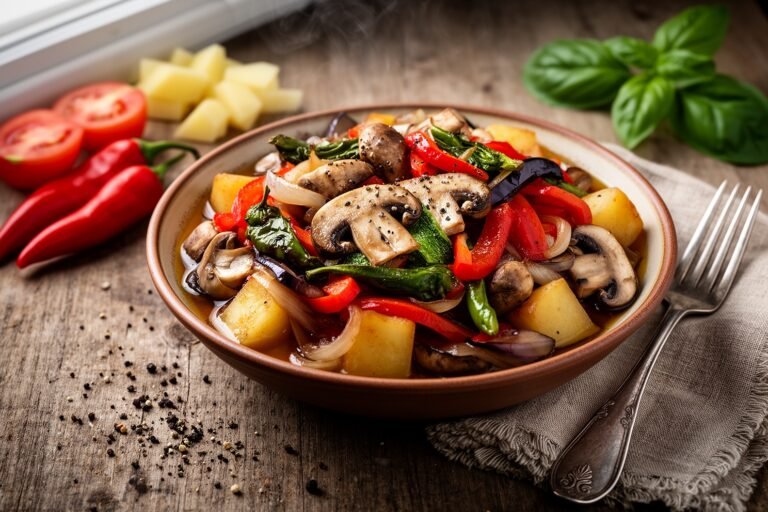
Southern Italy. Crafted with fresh mushrooms, onions, bell peppers, eggplant, tomatoes, zucchini, and potatoes, this recipe delivers
a vibrant, nutrient-rich meal that supports vitality and flavor.
Ready in just 70 minutes, it’s the pinnacle of lunch/dinner elegance.
The Story Behind Italian Giambotta
How to Make Italian Giambotta
Follow our traditional Roman technique for perfect results
Ingredients
- 2 tablespoons extra virgin olive oil
- 1/4 pound fresh mushrooms, cleaned and sliced
- 1 medium onion, diced
- 4 Italian fryer peppers, sliced
- 1 red bell pepper, small diced
- 1 baby eggplant, sliced into 1/2-inch rounds, then halved
- 2 ripe tomatoes, thinly sliced
- 2 medium zucchini, sliced into 1/2-inch rounds
- 3 medium potatoes, peeled and diced into 1-inch cubes
- Salt and freshly ground black pepper, to taste
The Preparation
- **Prepare the Vegetables:** Ensure all vegetables are thoroughly washed, sliced, and diced as specified. This stew benefits from uniform cuts for even cooking.
- **Sauté Aromatics:** In a large, heavy-bottomed pot or Dutch oven, heat the extra virgin olive oil over medium heat. Add the diced onion and cook until softened and translucent, about 5-7 minutes.
- **Build the Flavor Base:** Add the sliced Italian fryer peppers, red bell pepper, and mushrooms to the pot. Sauté for another 8-10 minutes, stirring occasionally, until they begin to soften.
- **Introduce Heartier Vegetables:** Stir in the diced potatoes and sliced eggplant. Cook for 5 minutes, allowing them to slightly brown and absorb the flavors in the pot.
- **Add Remaining Vegetables:** Gently fold in the sliced zucchini and tomatoes. Season generously with salt and freshly ground black pepper.
- **Simmer to Perfection:** Reduce the heat to low, cover the pot, and let the giambotta simmer for 30-40 minutes, or until all the vegetables are fork-tender. Stir occasionally to prevent sticking and ensure even cooking. The vegetables will release their own liquids, creating a rich broth.
- **Taste and Serve:** Taste and adjust seasoning as needed. Serve hot, perhaps with a drizzle of fresh extra virgin olive oil and a sprinkle of fresh basil or parsley if desired.
Expert Tips for Best Results
To achieve perfectly tender yet structured vegetables, avoid over-stirring during the simmering process. Let the vegetables gently cook in their own juices, checking for tenderness with a fork. Add a splash of vegetable broth if the stew seems too dry before the vegetables are tender.
Finish your Giambotta with a generous drizzle of high-quality extra virgin olive oil just before serving. The fresh, peppery notes of the oil will elevate the dish’s inherent flavors and aromas significantly. A sprinkle of fresh basil or parsley also adds a wonderful aromatic lift.
Giambotta tastes even better the next day! Store cooled leftovers in an airtight container in the refrigerator for up to 3-4 days. For longer storage, freeze portions for up to 2-3 months. Thaw overnight in the fridge and reheat gently on the stovetop.
Kcal
Wellness Note
This Giambotta recipe is a prime example of the Mediterranean diet’s power. Brimming with a rainbow of fresh vegetables, it delivers an abundance of fiber, antioxidants, and essential vitamins, supporting heart health, digestion, and overall longevity. A truly nourishing meal.
Frequently Asked Questions
Is this recipe authentic?
Absolutely. Giambotta is a cherished part of Southern Italian culinary tradition, reflecting the region’s resourceful use of seasonal vegetables. Our recipe stays true to these roots, honoring the simple yet profound flavors that define authentic Italian home cooking.
Can I make it ahead?
Yes, Giambotta is an excellent make-ahead dish! The flavors meld and deepen overnight, often tasting even better the next day. Store it in an airtight container in the refrigerator for up to 3-4 days. Reheat gently on the stovetop or in the microwave.
Is it healthy?
Undoubtedly. This Giambotta is a nutritional powerhouse. It’s packed with vitamins, minerals, and fiber from a wide array of vegetables, making it highly beneficial for digestion, heart health, and maintaining energy levels, perfectly aligning with the principles of the Mediterranean diet.