
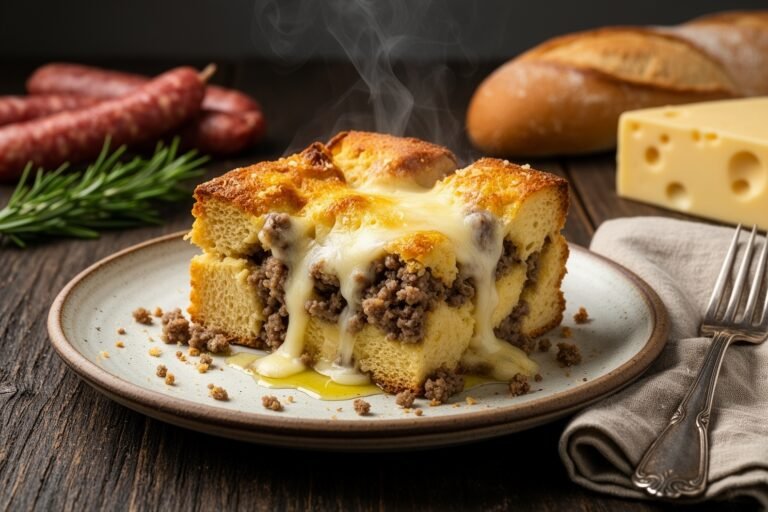
Salsiccia e Pane Benedetto: A Roman Breakfast Strata for Longevity
Salsiccia e Pane Benedetto — A refined expression of Roman culinary heritage.
Traditionally crafted with artisanal Italian sausage and crusty bread, this Gustoli-exclusive version is optimized for heart health.
Ready in 90 minutes, it seamlessly bridges authentic Italian tradition with modern nutritional excellence.
Beyond the Plate: The Story of Salsiccia e Pane Benedetto
Mastering the Technique
A step-by-step guide to Italian perfection
The Artisan’s Pantry
Selecting the right components is 70% of the Italian culinary success. Here is what I’ve curated for this Salsiccia e Pane Benedetto:
- One artisan, day-old Tuscan-style baguette — Slice it into generous 1-inch thick rounds; stale bread is crucial for absorbing the custard properly.
- One medium sweet golden Vidalia onion — Dice it finely to ensure it melts seamlessly into the savory sausage mixture.
- Three delicate green spring onions (scallions) — Chop both the white and green parts; the white adds pungency while the green brings a fresh finish.
- Three links of finely ground Roman mild pork sausage — Remove the casings before cooking; this allows the meat to crumble beautifully and infuse its flavor.
- Two generous cups of nutty Emmental-style Swiss cheese — Shred this yourself from a block for superior melt and flavor.
- One cup of aged Parmigiano-Reggiano, freshly grated — Use the finest quality; its salty, umami notes are irreplaceable.
- Half a cup of tangy Mediterranean feta, crumbled — This offers a delightful salty counterpoint to the richness of the other cheeses and sausage.
- Fourteen pasture-raised organic eggs — Bring them to room temperature; they will blend more evenly into the custard.
- One and a half cups of whole organic dairy milk — Choose whole milk for a richer, more luxurious custard texture.
- A quarter cup of creamy full-fat Greek yogurt — This is my Gustoli tweak! It adds a subtle tang and remarkable creaminess, replacing heavier creams for a lighter, yet equally indulgent, custard.
- Half a teaspoon of fiery cayenne pepper — Adjust this to your preference; it adds a warming, gentle heat.
- Two tablespoons of pungent, whole-grain Dijon mustard — Dijon adds a depth of flavor and helps emulsify the custard, ensuring a smooth texture. Consider exploring our range of authentic Italian condiments for other flavor enhancers.
- One teaspoon of freshly picked Calabrian rosemary, finely chopped — The aromatic pine notes of fresh rosemary complement pork beautifully; dried can be used but with half the quantity.
- A generous pinch of flaky sea salt & freshly cracked black pepper — Season to taste, remembering the saltiness from the cheeses and sausage.
The Culinary Workflow
-
The Foundation: Preparing the Golden Crust
Begin by meticulously slicing your day-old Tuscan-style baguette into 1-inch thick rounds. Arrange these elegant bread slices in a single layer at the bottom of a well-buttered 9×13-inch baking dish. You want a snug fit, a beautiful mosaic of bread.
Listen for the soft tear of the crust as you cut; envision each slice becoming a golden vessel, ready to soak up the rich, savory custard. This foundation is key to the strata’s integrity and texture.
Alessia’s personal shortcut: If your baguette is not perfectly stale, give the slices a quick toast in a dry pan for 2-3 minutes per side. This enhances their ability to absorb the liquid without becoming soggy.
-
Building the Savory Core: Salsiccia e Cipolla
In a large, heavy-bottomed skillet, brown the finely ground Roman mild pork sausage over medium-high heat. As it cooks, break it into small, even crumbles with a wooden spoon. Once deeply browned and fragrant, remove the sausage with a slotted spoon, reserving any rendered fat in the pan.
Watch for the sausage to develop a rich, mahogany crust; this is where the profound flavor lives. The sizzle and aroma should fill your kitchen, a promise of the deliciousness to come. The fat left in the pan is liquid gold, full of flavor.
Here is a trick: If you find your sausage lacking depth, a tiny splash of red wine vinegar at the end of browning helps to deglaze the pan and intensify its notes. Once the sausage is cooked, you might consider our exquisite meat recipes for more inspiration on preparing flavorful meats.
-
The Aromatic Infusion: Soffritto di Cipolle e Scalogno
Reduce the heat to medium. Add the diced sweet golden Vidalia onion and the white parts of the spring onions to the reserved sausage fat in the skillet. Sauté gently until they become translucent and tender, about 5-7 minutes. Stir in the chopped Calabrian rosemary.
Listen to the gentle hiss as the onions soften, and breathe in the sweet, earthy perfume of the rosemary awakening. Avoid browning them; we are looking for softness and translucency, a tender aromatic base.
To be honest, I sometimes add a small pinch of red pepper flakes here for a subtle kick that warms the palate, especially when it’s chilly outside. This step is about building layers of delicate aroma.
-
The Custard’s Embrace: La Crema Ricca
In a large bowl, whisk together the pasture-raised organic eggs until frothy. Gradually whisk in the whole organic dairy milk, creamy full-fat Greek yogurt, pungent whole-grain Dijon mustard, a whisper of fiery cayenne pepper, flaky sea salt, and freshly cracked black pepper. Grate in a touch of fresh nutmeg for a sublime, unexpected warmth.
Observe the mixture transforming into a pale, golden custard; it should be smooth and homogenous. The whisking should feel rhythmic, creating tiny bubbles that promise a light, airy strata once baked.
Alessia’s secret: Make sure the eggs are truly at room temperature. This prevents them from seizing up when combined with other liquids and ensures a perfectly smooth, velvety custard that evenly coats your our curated artisan bread selection.
-
Assembling the Layers: Stratificazione Perfetta
Scatter half of the cooked sausage and sautéed onion mixture over the bread slices in the baking dish. Follow with half of the shredded Emmental-style Swiss cheese and half of the freshly grated Parmigiano-Reggiano. Create a second layer with the remaining bread, sausage-onion mixture, and cheeses.
Take your time, arranging each component with care. This layering is the “strata” in strata, creating distinct textures and flavors in every bite. It should look abundant, a comforting promise.
Here is a tip: Gently press down on each layer to ensure everything is compact. This helps the strata hold its shape beautifully after baking, making for an impressive presentation, a hallmark of Italian Breakfast & Brunch traditions.
-
The Patient Bake: Il Forno Lento
Pour the rich egg custard evenly over the assembled layers, making sure every piece of bread is thoroughly soaked. Sprinkle the tangy Mediterranean feta and the green parts of the spring onions over the top. Cover the dish tightly with foil and refrigerate for at least 4 hours, or ideally, overnight.
The waiting is the hardest part, but it’s essential. This resting period allows the bread to fully absorb the custard, preventing a dry interior and creating a tender, uniform texture. You should see the bread visibly plump up with the liquid.
Before baking, preheat your oven to 350°F (175°C). Uncover the strata and bake for 45-50 minutes, or until the top is golden brown and the custard is set. A knife inserted into the center should come out clean. Let it rest for 10 minutes before serving. This brief rest allows the juices to redistribute, ensuring a moist and flavorful result.
Alessia’s Expert Secrets
The key to a perfectly tender, yet structured strata is the day-old bread and the overnight soak. Stale bread acts like a sponge, ensuring every crumb absorbs the rich custard. The prolonged rest allows the flavors to meld beautifully and the bread to soften without disintegrating during baking.
This savory strata pairs beautifully with a simple, bright insalata verde dressed with a lemon vinaigrette to cut through the richness. For a morning beverage, a robust Italian espresso is ideal. If serving for brunch, a crisp, dry Prosecco offers a delightful celebratory note.
Recipe Insights & Tips
Why is Roman mild pork sausage essential for this dish?
The mild Italian pork sausage provides a foundational depth of savory, umami flavor that is characteristic of many Italian dishes. Its unique blend of spices complements the cheeses and herbs without overpowering them. It brings a robust heartiness that defines this breakfast strata.
How does this fit into a Longevity diet?
This strata, with its balance of protein, complex carbohydrates from the bread, and a medley of cheeses, aligns well with the principles of the Mediterranean diet. The use of lean Italian sausage (when available), fresh herbs, and the inclusion of Greek yogurt for added creaminess and probiotics, contribute to its nutritional value. It’s a satisfying dish that provides sustained energy and supports overall wellness, a truly nourishing way to start your day.
Kcal
Wellness & Longevity Note
Crafted with balanced nutrition in mind, each serving of this Salsiccia e Pane Benedetto delivers approximately 569 calories, providing a hearty start to your day. The pasture-raised eggs are a rich source of complete protein and essential vitamins, while the lean Italian sausage contributes beneficial fats and flavor. Our choice to incorporate Greek yogurt instead of heavier cream not only enhances the texture but also reduces saturated fat, supporting heart health without sacrificing indulgence. Fresh herbs like rosemary add antioxidants and contribute to the dish’s vibrant flavor profile, aligning perfectly with Gustoli’s commitment to both authentic taste and holistic well-being.