
The Hearty Canederli Dumplings: A Soulful Alpine Tradition
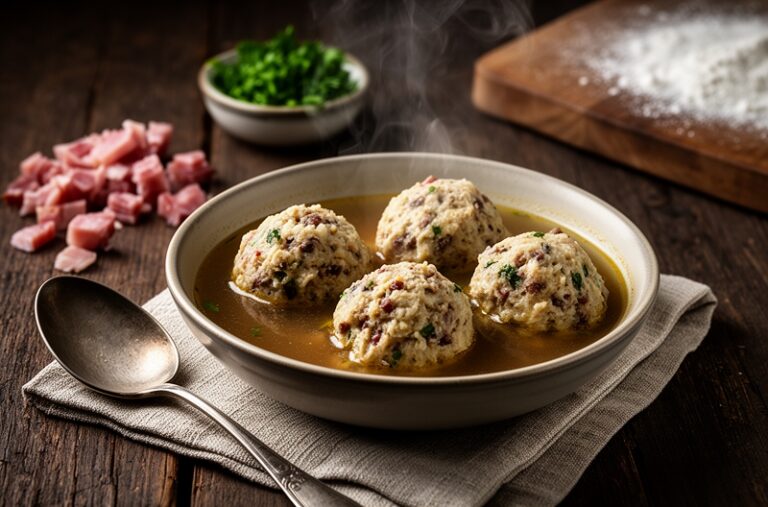
Italian Canederli Dumplings — A refined expression of Trentino-Alto Adige’s culinary heritage.
Traditionally crafted with artisanal day-old bread and smoked speck, this Gustoli-exclusive version is optimized for gut health.
Ready in 55 minutes, it seamlessly bridges authentic Italian tradition with modern nutritional excellence.
Beyond the Plate: The Story of Hearty Canederli Dumplings
Mastering the Technique
A step-by-step guide to Italian perfection
The Artisan’s Pantry
Selecting the right components is 70% of the Italian culinary success. Here is what I’ve curated for this Hearty Canederli Dumplings:
- Artisanal Day-Old White Bread — Diced precisely into 1/4-inch cubes. This texture ensures ideal absorbency without becoming mushy.
- Full-Fat Alpine Milk — About 1½ cups. Warm it gently, but do not boil. Warm milk helps the bread soften evenly.
- Unsalted European Butter — One generous tablespoon. This provides a rich, foundational flavor for sautéing.
- Sweet Yellow Onion — One small, finely minced. Its sweetness mellows as it cooks, adding depth.
- Tender Green Leek — Half a leek, minced and thoroughly rinsed. Make sure to remove any grit for a clean taste.
- Fresh Italian Flat-Leaf Parsley — Two tablespoons, finely minced. This adds a bright, herbaceous lift.
- Finely Cubed, Smoked Speck — Four ounces. Look for high-quality, authentic Alto Adige speck for its distinct smoky-sweet flavor.
- Large Farm-Fresh Eggs — Two units, lightly beaten. These are crucial binders for the dumplings.
- All-Purpose “00” Flour — Between ¼ to 1 cup, plus extra for dusting. Start with less and add until the mixture holds its shape.
- Flaky Sea Salt and Freshly Ground Black Pepper — To taste. Seasoning is vital at every stage.
- Rich Beef or Chicken Broth — Eight cups of a high-quality, homemade-style stock. This is the soul of the dish.
The Culinary Workflow
-
Building the Flavor Base
Melt the unsalted butter in a robust skillet over medium heat. Introduce the finely minced sweet onion and tender leek, allowing them to soften until translucent, about 5-7 minutes. This gentle sautéing coaxes out their natural sweetness and forms the aromatic foundation for your dumplings. Next, add the finely cubed smoked speck, crisping it gently until fragrant and slightly rendered. You’ll notice the fat beginning to shimmer and the kitchen filling with a rich, savory scent. Finally, stir in the fresh Italian parsley, letting its bright notes awaken in the warmth. Make sure to scrape up any delicious browned bits from the bottom of the pan.
The secret here is patience; do not rush this initial sauté. The slow rendering of the speck releases its intense, smoky essence, which then permeates the delicate onions and leeks. I always ensure the vegetables are truly soft before adding the speck, creating a multi-layered flavor profile. This step is also a good moment to appreciate the sound of the ingredients sizzling gently. It truly is the start of something beautiful.
-
The Art of the Mixture
In a large mixing bowl, combine the precisely diced day-old bread with the warm Alpine milk. Allow the bread to absorb the milk for about 10 minutes. This creates the foundational texture. Once softened, gently add the sautéed speck and vegetable mixture, along with the lightly beaten farm-fresh eggs. Begin to combine these ingredients. As you work, you’ll feel the texture of the bread becoming moist and pliable.
Now, progressively add the “00” flour, starting with a quarter cup, kneading gently with your hands. The goal is a mixture that holds its shape without being overly sticky or too dry. You should aim for a consistency that, when squeezed gently, holds together without crumbling. The scent should be a comforting blend of savory speck and fresh herbs. Add flaky sea salt and freshly ground black pepper to taste. Remember, the speck is salty, so season judiciously.
This is where the “Gustoli tweak” comes in: resist the urge to overwork the dough. A light touch ensures tender dumplings. If the mixture feels too wet, add a little more flour, a tablespoon at a time. My Nonna taught me to trust my instincts here; the dough will tell you when it’s just right. I find this stage meditative, shaping the future of a delicious meal. It’s not just mixing; it’s an embrace of flavors.
-
Shaping and Poaching Perfection
With floured hands, gently form the mixture into small, golf ball-sized dumplings. Each should be compact but not overly dense. Dust them lightly with a little extra flour if they feel sticky. This careful shaping prevents them from disintegrating in the broth. As you roll them, you’ll see a smooth, uniform surface emerge, a visual cue of their readiness. Their scent is a preview of the wholesome goodness to come.
Bring the rich beef or chicken broth to a gentle simmer in a wide pot. This is crucial – a rolling boil will break the dumplings apart. Carefully lower the Canederli into the simmering broth, making sure not to overcrowd the pot. Poach them for about 15-20 minutes, or until they float to the surface and are cooked through. You’ll observe them gently swelling and becoming beautifully buoyant, indicating they are done. The broth should remain clear, not cloudy.
I always taste a small piece of the first dumpling to ensure perfect seasoning and texture. If they seem too fragile, a pinch more flour in the remaining mixture can help. Serve these delightful dumplings immediately, nestled in their flavorful broth. They are truly an exquisite example of how humble ingredients can create a profound culinary experience, a dish that pairs beautifully with our robust meat recipes or as a standalone soulful pasta dish.
Alessia’s Expert Secrets
For truly tender Canederli, ensure your day-old bread is thoroughly soaked but not waterlogged. The key is gentle mixing; overworking the dough develops gluten, leading to tough dumplings. I advise a light hand, almost caressing the mixture into shape, for that signature delicate bite.
These hearty dumplings sing when paired with a light, crisp Alto Adige Pinot Bianco. The wine’s acidity cuts through the richness of the speck and butter. A simple sprinkle of freshly grated Parmesan or a drizzle of your finest essential Italian sauces and condiments like a sage-infused brown butter sauce also elevates the experience beautifully.
Recipe Insights & Tips
Why is artisanal day-old bread essential for this dish?
Day-old bread provides the perfect structure for Canederli. Its slightly dried texture allows it to absorb the milk uniformly without becoming soggy. Fresh bread is too soft and will result in dense, heavy dumplings. This tradition also speaks to the Italian commitment to mindful cooking and minimizing waste, giving new life to humble our artisan Italian breads.
How does this fit into a Longevity diet?
Canederli, when prepared thoughtfully, aligns well with a longevity-focused approach. The use of whole-grain friendly bread (if desired) provides complex carbohydrates. Speck, used in moderation, offers lean protein and beneficial fats. The nutrient-rich broth is hydrating and easy to digest, making this a comforting and nourishing meal that supports overall wellness.
Kcal
Wellness & Longevity Note
This recipe offers a substantial and comforting meal. The calorie count reflects the richness of the ingredients, especially the speck and butter. However, the dish is packed with flavor from real, unprocessed components. The broth provides valuable hydration and minerals, while the bread (especially if using a rustic, sourdough option) can contribute to healthy gut flora. Enjoying Canederli is about savoring robust flavors and nourishing your body with wholesome, traditional ingredients.