
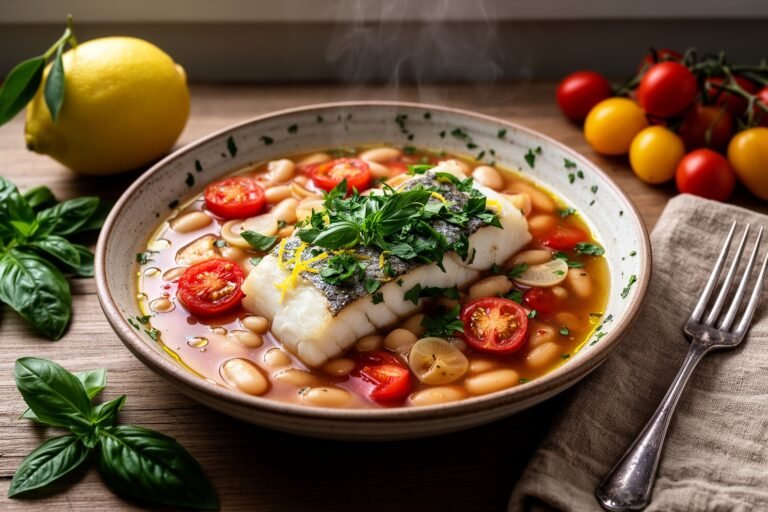
The Roman Fisherman’s Halibut Stew: A Coastal Elegance for Longevity
The Roman Fisherman’s Halibut Stew — A refined expression of Lazio’s culinary heritage.
Traditionally crafted with tender halibut fillets and sun-kissed cherry tomatoes, this Gustoli-exclusive version is optimized for heart health and metabolic wellness.
Ready in 40 minutes, it seamlessly bridges authentic Italian tradition with modern nutritional excellence.
Beyond the Plate: The Story of The Roman Fisherman’s Halibut Stew
Mastering the Technique
A step-by-step guide to Italian perfection
The Artisan’s Pantry
Selecting the right components is 70% of the Italian culinary success. Here is what I’ve curated for this The Roman Fisherman’s Halibut Stew:
- Four pristine 6-oz wild-caught halibut fillets (skin-on) — Pat dry thoroughly for a superior sear, ensuring a golden crust and flaky interior.
- One generous teaspoon of flaky sea salt — Use a coarse flaky salt; it adheres better to the fish and dissolves perfectly into the stew, enhancing every layer of flavor.
- Half a teaspoon of freshly ground black pepper — Grind just before use to capture the most volatile aromatics; it makes a significant difference.
- Six tablespoons of Gustoli’s cold-pressed extra virgin olive oil — Choose a robust, fruity olive oil from Puglia for this dish; its character stands up beautifully to the rich flavors.
- Two tablespoons of briny capers — Always drain capers thoroughly and, if desired, a quick rinse removes excess brine, allowing their true piquant flavor to shine.
- Two large sweet garlic cloves — Slice garlic, don’t mince, to prevent burning and to release its sweetness slowly into the olive oil.
- Two pints of sun-ripened cherry tomatoes — Halving them allows their juices to mingle beautifully with the stew, creating a natural sweetness and body.
- Two 15-oz cans of creamy cannellini beans — Rinsing removes excess sodium and any starchy residue, ensuring the beans are light and absorb the stew’s flavors.
- Half a cup of savory low-sodium chicken stock — While chicken stock is used here for its mildness, a good quality vegetable broth can also be substituted for a purely seafood profile.
- Half a teaspoon of zesty organic lemon zest plus two teaspoons fresh lemon juice (from one lemon) — Zest the lemon before juicing to maximize yield and avoid any bitter pith.
- Quarter cup of fragrant flat-leaf parsley — Add fresh herbs at the very end to preserve their vibrant color and delicate aroma.
- Quarter cup of aromatic sweet basil — Tear basil leaves rather than chop to prevent bruising and retain their essential oils.
The Culinary Workflow
-
The Golden Sear: Preparing the Halibut
Pat the beautiful halibut fillets completely dry with paper towels. Season generously on all sides with half of your exquisite flaky sea salt and freshly ground black pepper. Heat two tablespoons of your finest extra virgin olive oil in a wide, heavy-bottomed pan over medium-high heat until it shimmers.
Carefully place the fish, skin-side down, into the hot oil. Listen for that satisfying sizzle – it tells you the pan is hot enough. Let it sear undisturbed for about 4-5 minutes, until the skin is wonderfully crisp and golden, and the flesh has turned opaque about halfway up the sides.
My personal shortcut here is to use a fish spatula to gently press down on the fillets for the first minute. This ensures maximum skin contact with the pan, guaranteeing that irresistible crispy skin.
-
Building the Aromatic Foundation: Creating the Soffritto
Once the halibut is beautifully seared, carefully transfer it to a plate, skin-side up, and set it aside. Reduce the heat to medium and add another two tablespoons of olive oil to the same pan. Swirl it around, allowing it to pick up any delicious fond left from the fish.
Now, add your thinly sliced garlic and briny capers to the fragrant oil. Sauté them gently for about 1-2 minutes, watching closely for the garlic to turn a pale gold and release its sweet perfume, but never letting it brown. That perfect aroma signals the base is ready.
Here’s a trick I learned from my Nonna: If the pan feels too dry or things are browning too quickly, add a tiny splash of water (or even white wine!) to deglaze the pan. It keeps the garlic tender and prevents bitterness.
-
The Heart of the Stew: Simmering the Mediterranean Flavors
Introduce the halved cherry tomatoes and the creamy cannellini beans to the pan. Add your low-sodium chicken stock, the remaining flaky sea salt and black pepper, and half of the fresh lemon zest. Stir everything together gently, ensuring the ingredients are well combined.
Bring the stew to a gentle simmer, then reduce the heat to low, cover the pan, and let it cook for about 10-12 minutes. You’ll know it’s ready when the tomatoes have softened and burst, releasing their sweet juices, and the flavors have beautifully melded into a harmonious Mediterranean symphony.
I always taste the stew at this stage and adjust the seasoning. Sometimes, a tiny pinch more salt or a dash of pepper makes all the difference, truly bringing the flavors to life.
-
The Grand Finale: Finishing and Serving
Gently nestle the seared halibut fillets, skin-side up, back into the simmering stew. Spoon some of the luscious broth over the fish. Cover the pan once more and continue to cook for another 5-7 minutes, or until the halibut is cooked through and flakes easily with a fork. Be careful not to overcook!
Remove the pan from the heat. Stir in the remaining fresh lemon juice, the remaining chopped flat-leaf parsley, and the torn basil leaves. A swirl of your final two tablespoons of exquisite extra virgin olive oil right before serving adds an incomparable sheen and depth of flavor.
To be honest, the final flourish of fresh herbs and a drizzle of really good olive oil isn’t just for looks; it brightens the entire dish, providing a fresh contrast to the rich, savory stew. It’s the Gustoli signature touch.
Alessia’s Expert Secrets
For the halibut, the key is the initial high-heat sear for crisp skin, followed by a gentle simmer in the stew. This keeps the flesh tender and moist, creating a delightful contrast between the exterior and interior. Avoid overcooking the fish; it should flake easily but still be succulent.
This vibrant stew pairs exquisitely with a crisp, dry white wine like a Vermentino from Sardinia or a Pinot Grigio from Alto Adige. For a side, consider a simple piece of crusty artisan Italian bread to soak up every drop of the flavorful broth.
Recipe Insights & Tips
Why is Halibut essential for this dish?
Halibut, though not always found in traditional Roman coastal stews which often feature more local white fish, is prized for its firm, flaky white flesh that holds its shape beautifully in a stew. Its mild, sweet flavor allows the vibrant Mediterranean ingredients to truly shine, absorbing their aromas without being overpowered. This makes it an ideal choice for a lighter, quicker fish stew.
How does this fit into a Longevity diet?
This Roman Fisherman’s Halibut Stew perfectly embodies the principles of the Mediterranean diet, a cornerstone of longevity. It features lean, high-quality protein from the halibut, heart-healthy fats from extra virgin olive oil, and abundant fiber and antioxidants from fresh tomatoes, capers, and cannellini beans. This combination supports cardiovascular health, reduces inflammation, and promotes overall metabolic wellness.
Kcal
Wellness & Longevity Note
This dish is a testament to the power of simple, high-quality ingredients. The halibut provides essential omega-3 fatty acids vital for brain and heart health. Cannellini beans contribute significant dietary fiber, aiding digestion and stabilizing blood sugar, which is crucial for preventing chronic diseases. Combined with antioxidant-rich tomatoes and herbs, this recipe is a delicious way to nourish your body and support a long, healthy life. It’s also naturally gluten-free and high in protein, making it an excellent choice for diverse dietary needs.