
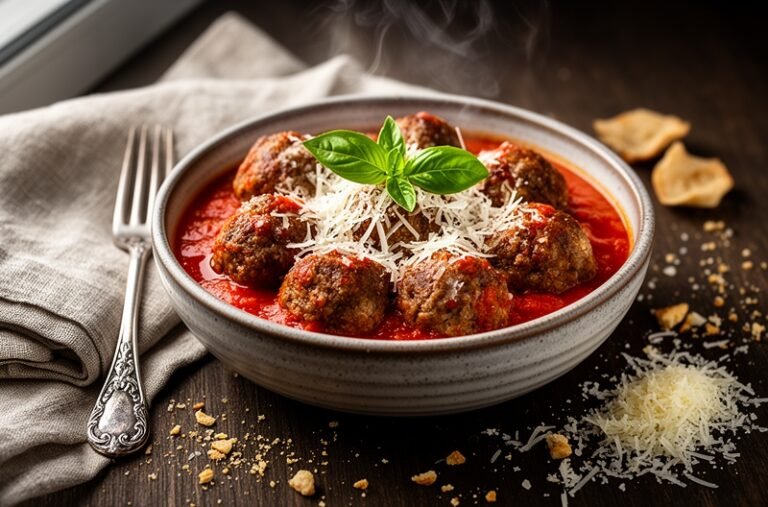
Divine Roman Meatballs: A Timeless Italian Delicacy
Classic Italian Meatballs is a traditional Italian dish from
Lazio (Rome) region. Crafted with savory Italian mild sausage, aromatic bread crumbs, rich Parmesan cheese, and a binding egg, this recipe delivers
a hearty, flavorful, and protein-rich centerpiece for any meal.
Ready in just 40 minutes, it’s the pinnacle of lunch/dinner elegance.
The Story Behind Classic Italian Meatballs
How to Make Classic Italian Meatballs
Follow our traditional Roman technique for perfect results
Ingredients
- 1 package (16 ounces) Johnsonville® All Natural Fresh Italian Mild Ground Sausage
- 1/4 cup dried bread crumbs
- 1/4 cup milk
- 1 egg, beaten
- 1/4 cup grated Parmesan cheese
The Preparation
- Gently combine the Italian sausage, bread crumbs, milk, beaten egg, and Parmesan cheese in a large mixing bowl. Avoid overmixing, as this can make the meatballs tough.
- Using clean hands, form the mixture into approximately 16-20 small, uniform meatballs, about 1 ½ inches in diameter.
- Heat a large non-stick skillet over medium-high heat. Place the meatballs in the hot skillet, ensuring not to overcrowd the pan. Brown them on all sides, turning occasionally, for about 8-10 minutes until deeply golden.
- Reduce the heat to medium-low, cover the skillet, and continue to cook for another 10-15 minutes, or until the meatballs are cooked through and reach an internal temperature of 160°F (71°C). If adding to a sauce, transfer them to simmer in your favorite marinara for at least 20 minutes to absorb more flavor.
- Serve hot with your preferred pasta, polenta, or a fresh side salad.
Expert Tips for Best Results
For the most tender meatballs, avoid overworking the mixture. Gentle handling prevents the protein in the sausage from becoming tough. The milk and breadcrumbs also contribute to a moist, light texture.
Elevate the flavor profile by adding a teaspoon of finely minced garlic or a tablespoon of fresh chopped parsley to the meatball mixture. Sautéing them in a quality olive oil will also deepen their aromatic richness.
Cooked meatballs can be stored in an airtight container in the refrigerator for up to 3-4 days. For longer preservation, freeze them in a single layer on a baking sheet before transferring to a freezer-safe bag for up to 3 months. Thaw overnight in the fridge before reheating.
Kcal
Wellness Note
These Classic Italian Meatballs offer a substantial source of protein, essential for muscle health and satiety, aligning with the Mediterranean focus on wholesome, satisfying meals. While flavorful, pairing them with abundant vegetables or whole grains helps create a balanced meal consistent with longevity principles.
Frequently Asked Questions
Is this recipe authentic?
Absolutely. Our Classic Italian Meatballs are crafted following traditional methods, emphasizing the quality of ingredients and simple, robust flavors characteristic of authentic Italian home cooking. We celebrate the culinary heritage passed down through generations.
Can I make it ahead?
Yes, these meatballs are excellent for meal prep! Cooked meatballs can be refrigerated in an airtight container for up to 3-4 days. To reheat, gently warm them in a pan with a little sauce or broth, or in the oven until heated through, ensuring they remain moist.
Is it healthy?
When integrated into a balanced meal, these meatballs can be a healthy choice. They provide significant protein. To maximize health benefits within a Mediterranean diet, serve them alongside a generous portion of colorful vegetables or a whole-grain pasta.