
Classic Italian Lasagne: A Roman Gastronomic Masterpiece
Classic Italian Lasagne is a traditional Italian dish from
Rome and the Lazio region. Crafted with savory slow-cooked ragù, silky béchamel sauce, and fresh pasta sheets, this recipe delivers
heartwarming comfort and nourishing satisfaction.
Ready in just 75 minutes, it’s the pinnacle of lunch/dinner elegance.
The Story Behind Classic Italian Lasagne
How to Make Classic Italian Lasagne
Follow our traditional Roman technique for perfect results
Ingredients
- 1 tbsp olive oil
- 1 large onion, finely chopped
- 2 carrots, finely chopped
- 2 celery stalks, finely chopped
- 500g lean ground beef (or a mix of beef and pork)
- 100ml dry red wine
- 800g crushed tomatoes (passata)
- 200ml beef or vegetable broth
- 1 bay leaf
- Salt and freshly ground black pepper to taste
- 80g unsalted butter
- 80g all-purpose flour
- 1 liter whole milk, warmed
- Pinch of freshly grated nutmeg
- Salt and white pepper to taste
- 250g pack fresh lasagne sheets
- Olive oil, for greasing
- Large handful grated Parmesan cheese (approx. 100g)
- Fresh basil leaves, for garnish (optional)
The Preparation
- Step 1: Begin the Ragù. Heat the olive oil in a large, heavy-bottomed pot or Dutch oven over medium heat. Add the chopped onion, carrots, and celery. Sauté gently for 8-10 minutes until softened, without browning.
- Step 2: Brown the Meat. Increase the heat slightly and add the ground beef (or meat mix). Break it up with a spoon and cook until evenly browned, about 5-7 minutes. Drain any excess fat.
- Step 3: Deglaze and Simmer. Pour in the red wine, scraping up any browned bits from the bottom of the pot. Let it simmer until the wine has almost completely evaporated. Stir in the crushed tomatoes, beef broth, and bay leaf. Season with salt and pepper. Bring to a gentle simmer, then reduce heat to low, cover, and cook for at least 1.5-2 hours, stirring occasionally, until the sauce is rich and thickened. The longer, the better. Remove the bay leaf before using.
- Step 4: Prepare the Béchamel. While the ragù simmers, melt the butter in a separate saucepan over medium heat. Whisk in the flour and cook for 1-2 minutes to create a roux, ensuring it doesn’t brown.
- Step 5: Finish the Béchamel. Gradually whisk in the warm milk, a little at a time, ensuring no lumps form. Continue whisking constantly until the sauce thickens to a smooth, creamy consistency. Season with salt, white pepper, and a pinch of nutmeg. Remove from heat.
- Step 6: Preheat and Prepare Dish. Preheat your oven to 190°C (375°F). Lightly grease a 9×13 inch (23×33 cm) baking dish with olive oil.
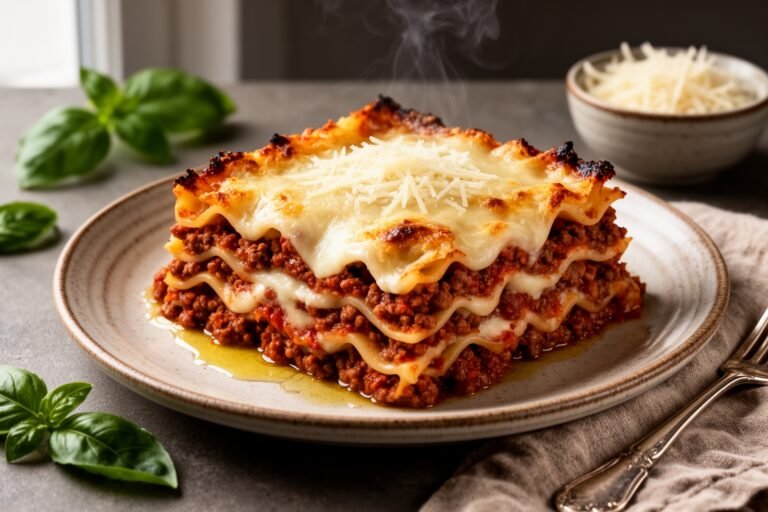
- Step 7: Assemble the Lasagne. Spread a thin layer of béchamel sauce on the bottom of the prepared baking dish. Place a single layer of lasagne sheets over the béchamel. Top with a generous layer of ragù, followed by another layer of béchamel, and a sprinkle of Parmesan cheese. Repeat this layering process: pasta, ragù, béchamel, Parmesan, until all ingredients are used, ending with a final layer of pasta, béchamel, and a generous topping of Parmesan.
- Step 8: Bake to Perfection. Cover the baking dish loosely with aluminum foil. Bake for 25 minutes. Then, remove the foil and bake for another 20-25 minutes, or until the top is golden brown and bubbly.
- Step 9: Rest and Serve. Allow the lasagne to rest for at least 10-15 minutes before slicing and serving. This allows the layers to set and prevents it from falling apart. Garnish with fresh basil, if desired.
Expert Tips for Best Results
For perfectly tender pasta layers and a cohesive slice, ensure your ragù is thick, and the béchamel is creamy, not runny. Letting the lasagne rest for at least 15 minutes after baking is crucial; it allows the sauces to settle and makes for clean, elegant servings.
Elevate the depth of flavor by allowing your ragù to simmer slowly for at least 2 hours; this truly melds the ingredients. A final sprinkle of freshly grated Parmigiano Reggiano just before serving, along with a few torn basil leaves, will enhance its exquisite aroma.
Leftover lasagne can be stored in an airtight container in the refrigerator for up to 3-4 days. For longer preservation, individual portions can be frozen for up to 3 months. Thaw in the refrigerator overnight and reheat gently in the oven or microwave.
Kcal
Wellness Note
While indulgent, this Classic Italian Lasagne, when prepared with lean meats and fresh vegetables, aligns beautifully with the principles of the Mediterranean diet. It offers a balanced meal rich in protein, complex carbohydrates, and essential nutrients, contributing to sustained energy and overall well-being. Enjoy in moderation as part of a varied diet.
Frequently Asked Questions
Is this recipe authentic?
Absolutely. This recipe adheres to the time-honored techniques of Roman cuisine, featuring a slow-simmered ragù and a velvety béchamel, components vital to a truly authentic Italian lasagne. We honor tradition while ensuring exceptional flavor.
Can I make it ahead?
Yes, lasagne is an excellent make-ahead dish! You can assemble the entire dish up to 24 hours in advance, cover it tightly, and refrigerate. Add an extra 10-15 minutes to the covered baking time if baking from cold, then proceed with uncovering and browning.
Is it healthy?
This lasagne offers a satisfying balance of macronutrients. By choosing lean ground meat and incorporating plenty of vegetables into the ragù, it provides protein, fiber, and essential vitamins. While it’s a hearty dish, it can certainly be part of a healthy, balanced diet, especially given the whole ingredients and traditional preparation.