
Minestrone d’Inverno: Alessia’s Hearty Roman Vegetable Soup for Longevity
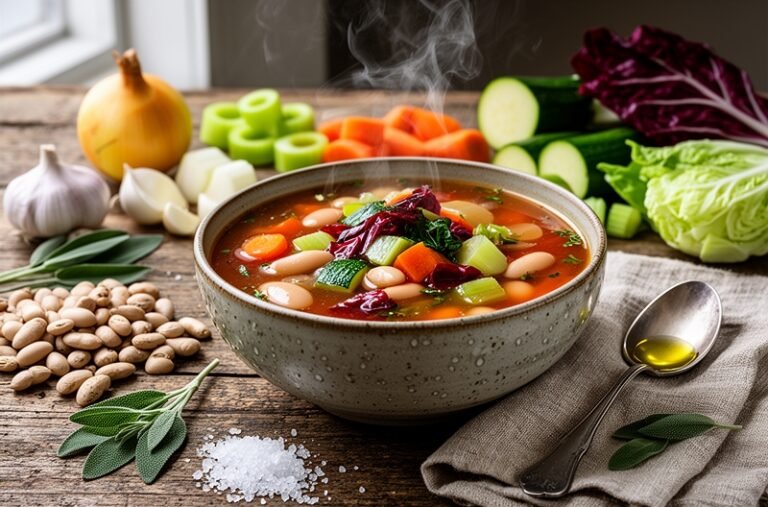
Roman Vegetable Soup — A refined expression of Lazio’s culinary heritage.
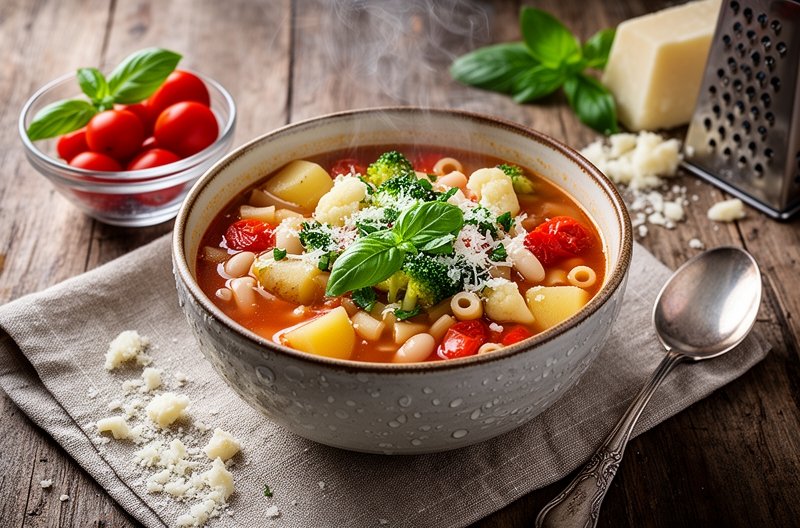
Traditionally crafted with creamy cannellini beans and seasonal vegetables, this Gustoli-exclusive version is optimized for heart health and longevity.
Ready in 120 minutes, it seamlessly bridges authentic Italian tradition with modern nutritional excellence.
Beyond the Plate: The Story of Minestrone d’Inverno
Mastering the Technique
A step-by-step guide to Italian perfection
The Artisan’s Pantry
Selecting the right components is 70% of the Italian culinary success. Here is what I’ve curated for this Minestrone d’Inverno:
- 1 ½ pounds creamy Tuscan cannellini beans — Pro-Tip: Soaking overnight is key for a tender texture and improved digestion.
- 3 tablespoons Gustoli’s finest cold-pressed extra virgin olive oil — Pro-Tip: Choose a robust, peppery oil to complement the earthy vegetables.
- A generous pinch of flaky Sicilian sea salt — Pro-Tip: Add gradually, tasting as you go, to avoid over-salting and to enhance natural flavors.
- 2-3 sprigs of fragrant fresh sage leaves — Pro-Tip: Bruise them lightly before adding to release their captivating aromatic oils.
- 2 whole, robust garlic cloves, peeled — Pro-Tip: Keeping them whole allows for a gentle infusion of flavor without overpowering the delicate vegetables.
- 2-3 medium sweet golden yellow onions, finely diced — Pro-Tip: A slow, gentle sauté ensures maximum sweetness and forms a perfect foundational flavor base.
- 8 medium vibrant organic carrots, sliced into ¼-inch coins — Pro-Tip: Uniform slicing guarantees even cooking and a pleasing texture in every spoonful.
- 5 crisp Roman celery stalks, thinly sliced into ¼-inch crescents — Pro-Tip: Select firm stalks; their subtle bitterness beautifully balances the sweetness of other vegetables.
- 5 medium tender green zucchini, halved lengthwise and sliced into ¼-inch half-circles — Pro-Tip: Add these later in the cooking process to retain a slight bite and their fresh, vibrant color.
- 1 bunch earthy red Swiss chard, washed, dried, stems removed, and leaves roughly chopped — Pro-Tip: The vibrant color indicates high nutrient content; its slight bitterness adds character.
- ½ head hearty green cabbage, cored and roughly chopped — Pro-Tip: Cabbage adds a wonderful natural sweetness and depth when allowed to cook slowly.
- 1 quart rich, homemade vegetable broth — Pro-Tip: A high-quality broth is foundational for this soup; consider making your own for superior flavor.
- 1 can (28 oz) sun-ripened San Marzano whole peeled tomatoes, juices reserved, tomatoes roughly crushed — Pro-Tip: The sweetness of San Marzanos is unparalleled; crushing them by hand offers a rustic, authentic texture.
The Culinary Workflow
-
The Bean Foundation
Begin by soaking your cannellini beans in plenty of cold water overnight. Drain and rinse them thoroughly the next morning. Place the beans in a large pot, cover with fresh water by several inches, and bring to a boil. Reduce the heat and simmer gently until tender, about 60-90 minutes.
You want them cooked through but not mushy. Listen for the gentle bubbling, a sign they are slowly softening. Taste one to check for that perfect creamy interior.
Alessia’s shortcut: If you’re short on time, a pressure cooker can significantly reduce the bean cooking time. Just be sure to follow the manufacturer’s instructions for dried beans.
-
Building the Soffritto Aromatics
In a large, heavy-bottomed pot or Dutch oven, warm the extra virgin olive oil over medium heat. Add the diced golden onions, sliced carrots, and celery crescents. Cook slowly, stirring often, until the vegetables soften and become translucent, about 10-15 minutes. Add the whole garlic cloves and sage leaves during the last 5 minutes.
Watch for the onions to turn a beautiful golden hue, and smell the sweet aroma filling your kitchen. This is the essence of Italian cooking – building flavor layer by layer. The sound of the vegetables sizzling gently, not scorching, tells you the heat is just right.
Alessia’s shortcut: Never rush the soffritto. It’s the soul of your soup. If you feel impatient, just remind yourself of the depth of flavor you are creating.
-
The Grand Simmer
Pour in the rich vegetable broth and the crushed San Marzano tomatoes with their juices. Stir everything together. Add the tender, pre-cooked cannellini beans. Bring the soup to a gentle simmer, then partially cover and let it cook for another 30 minutes, allowing the flavors to meld.
Notice the broth taking on a deeper color and the aromas intensifying. The gentle, consistent simmer is crucial here, not a rolling boil. It allows the starches from the beans to thicken the broth naturally.
Alessia’s shortcut: For an even richer broth, I sometimes add a parmesan rind during this simmering phase, removing it before serving. Since this recipe is our curated vegan Italian recipes, I skip the rind and instead focus on a really good quality broth.
-
The Verdant Finish
Add the sliced zucchini, chopped red Swiss chard, and hearty green cabbage to the simmering soup. Continue to cook for another 15-20 minutes, or until the vegetables are tender but still retain a slight bite. Season generously with flaky Sicilian sea salt to taste.
The greens will wilt and soften, adding their vibrant colors to the pot. The soup should become naturally thicker and more fragrant. This is where your minestrone truly comes alive visually and aromatically.
Alessia’s shortcut: Before serving, I always scoop out about a cup of the soup (mostly beans and some broth) and blend it until creamy. Stirring this back into the pot creates an incredibly velvety texture without needing any cream, making it perfectly aligned with dishes designed for heart health. A final drizzle of fresh extra virgin olive oil also brightens the flavors.
Alessia’s Expert Secrets
Achieving that perfect, comforting texture in minestrone is all about the beans. Blending a small portion of the cooked beans with some broth and stirring it back into the pot creates a natural, velvety richness that feels incredibly luxurious without any added dairy. Also, ensure your vegetables are cut uniformly for an appealing mouthfeel.
This hearty Minestrone d’Inverno sings when served with a piece of warm, crusty artisan Italian bread, perfect for soaking up every drop. For a wine pairing, a light-bodied, crisp Verdicchio or a dry Rosato would complement the earthy flavors beautifully.
Recipe Insights & Tips
Why are creamy Tuscan cannellini beans essential for this dish?
Cannellini beans are the soul of an authentic Italian vegetable soup. Their inherently creamy texture, when cooked properly, enriches the broth, lending a natural thickness and a satisfying mouthfeel. Beyond texture, they contribute a significant amount of plant-based protein and dietary fiber, making the soup incredibly wholesome and filling.
How does this fit into a Longevity diet?
This Minestrone d’Inverno is a prime example of a longevity-promoting meal. It’s packed with a diverse array of colorful vegetables, offering a spectrum of antioxidants and essential nutrients. The high fiber content from the beans and vegetables supports gut health, while the plant-based protein helps maintain muscle mass. Being naturally low in saturated fat and cholesterol, it aligns perfectly with the principles of the traditional Mediterranean diet, renowned for its contribution to a long, healthy life.
Kcal
Wellness & Longevity Note
This magnificent Minestrone, boasting approximately 2099 Kcal for the entire pot (roughly 262 Kcal per serving), is a powerhouse of plant-based nutrition. Each ingredient plays a vital role in promoting wellness. The abundance of fresh vegetables provides a rich source of vitamins (A, C, K), minerals, and phytonutrients known to reduce inflammation and protect against chronic diseases. The cannellini beans are a superstar for heart health, contributing soluble fiber that helps manage cholesterol levels, while their complex carbohydrates provide sustained energy. This recipe is naturally vegan, gluten-free, and aligned with a Mediterranean eating pattern, emphasizing whole, unprocessed foods for vibrant health and sustained longevity.