
The Golden Calabash Bake: A Roman-Inspired Spaghetti Squash Casserole for Wellness
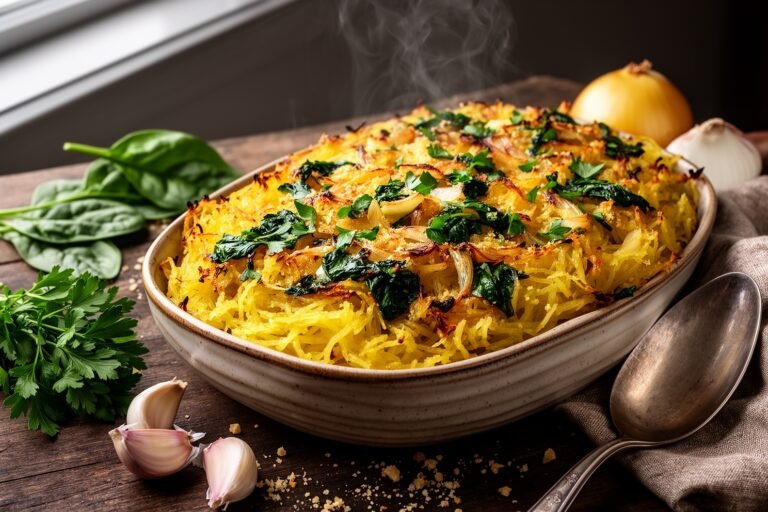
Italian Spaghetti Squash Casserole — A refined expression of Roman culinary heritage.
Traditionally crafted with spaghetti squash and fresh spinach, this Gustoli-exclusive version is optimized for metabolic harmony and heart vitality.
Ready in 95 minutes, it seamlessly bridges authentic Italian tradition with modern nutritional excellence.
Beyond the Plate: The Story of The Golden Calabash Bake
Mastering the Technique
A step-by-step guide to Italian perfection
The Artisan’s Pantry
Selecting the right components is 70% of the Italian culinary success. Here is what I’ve curated for this The Golden Calabash Bake:
- Two generously sized spaghetti squash — Select firm, blemish-free squash for the best yield and flavor.
- Three generous cups of vibrant baby spinach — Ensure your spinach is thoroughly washed and dried; excess moisture can dilute the casserole’s richness.
- One sweet golden onion, finely diced — A slow sauté develops its natural sugars, deepening the flavor base.
- Three cloves of fragrant Italian garlic, minced — Crush lightly before mincing to release maximum aromatic oils.
- A generous bunch of fresh Italian flat-leaf parsley, finely chopped — Add at the very end to preserve its bright, herbaceous notes.
- A quarter cup of artisanal low-sodium vegetable broth — Opt for a high-quality, mushroom-based broth for an added layer of umami.
- A quarter cup of unsweetened, creamy almond milk — Choose a brand without carrageenan to ensure a smooth, natural consistency.
- One large, organic farm-fresh egg — Room temperature eggs emulsify better and create a more cohesive binder.
- A generous pinch of flaky Mediterranean sea salt — Adjust salt levels gradually, tasting as you go.
- Freshly cracked black peppercorns, to your discerning taste — Use a grinder for the freshest, most pungent aroma.
- Two tablespoons of nutritional yeast — This provides a delicate, cheesy umami, perfect for our dairy-free preparation.
- A drizzle of robust cold-pressed extra virgin olive oil — Use a high-quality oil that adds its own peppery notes to the dish.
The Culinary Workflow
-
Preparing the Golden Calabash
Begin by carefully halving your spaghetti squash lengthwise. Scoop out the seeds and stringy bits. Brush the cut sides lightly with a touch of olive oil and season with a whisper of salt and pepper. Place the halves cut-side down on a baking sheet.
Roast the squash in a preheated oven at 200°C (400°F) for 45-55 minutes, or until the flesh is tender enough to shred easily with a fork. You are looking for a gentle caramelization on the edges and a yielding texture.
Alessia’s personal shortcut: If time is short, you can carefully pierce the whole squash several times and microwave it for 10-15 minutes until softened, then proceed to halve and deseed. This shaves off valuable roasting time without compromising flavor much.
-
Crafting the Aromatic Base
While your squash roasts, heat a drizzle of cold-pressed extra virgin olive oil in a large skillet over medium heat. Add the finely diced golden onion and sauté gently until it becomes translucent and sweet, about 5-7 minutes. Then, stir in the minced Italian garlic.
Listen for the gentle sizzle as the garlic hits the pan; its aroma will quickly fill your kitchen, signaling the foundation of your flavor. Cook for just a minute until fragrant, being careful not to let it brown, which can turn it bitter.
Alessia’s personal shortcut: To enhance the depth, I sometimes add a tablespoon of tomato paste with the garlic, cooking it down for a minute to intensify its sweetness before adding the spinach. It brings a subtle, sun-kissed complexity.
-
The Emerald Infusion
Now, it is time to incorporate the vibrant baby spinach into your aromatic base. Add it to the skillet in batches if necessary, stirring continuously until it wilts down completely. The goal is to remove as much moisture as possible.
Watch as the bright green leaves soften and shrink, transforming into a tender emerald mass. The pan should be relatively dry once the spinach has cooked, indicating that excess water has evaporated.
Alessia’s personal shortcut: After the spinach wilts, press it gently against the side of the pan with your spoon to squeeze out any residual water. This prevents a watery casserole and concentrates the spinach’s flavor beautifully.
-
Assembling the Layers of Harmony
Once the spaghetti squash is cooked, use a fork to gently scrape out the “strands” into a large mixing bowl. Add the sautéed onion, garlic, and spinach mixture to the squash. In a separate small bowl, whisk together the farm-fresh egg, almond milk, low-sodium vegetable broth, nutritional yeast, and a final seasoning of sea salt and freshly cracked black pepper.
Combine the seasoned liquid with the squash and vegetable mixture, ensuring everything is thoroughly coated. The egg acts as a natural binder, holding the ingredients together without heaviness. The rich color of the squash blends with the green spinach, creating a visual feast even before baking.
Alessia’s personal shortcut: I always add the finely chopped fresh Italian flat-leaf parsley at this stage, just before baking. Its vibrant color and fresh, peppery notes remain intact, offering a delightful counterpoint to the baked elements. For more exquisite vegetable mains, consider layering different herbs.
-
The Grand Finale
Transfer the entire mixture into a well-oiled baking dish. Spread it evenly to ensure uniform cooking. You want a consistent layer for that perfect, golden-brown crust.
Bake in your preheated oven at 190°C (375°F) for 20-25 minutes, or until the casserole is bubbling at the edges and a beautiful golden crust has formed on top. The aroma of baked garlic and sweet squash will fill your home.
Alessia’s personal shortcut: For an extra-crisp topping, finish under the broiler for the last 2-3 minutes, watching carefully to prevent burning. Let it rest for 5-10 minutes before serving to allow the flavors to meld and the casserole to set.
Alessia’s Expert Secrets
The key to a perfect casserole is the balance of textures. Avoid overcooking the squash initially; it should be tender, not mushy. Also, ensure you squeeze out excess moisture from the spinach to prevent a watery casserole, which can ruin the desired integrity of the dish.
This light yet satisfying bake pairs beautifully with a crisp, dry white wine like a Vermentino or a Pecorino from Lazio. For a complete meal, serve it alongside a vibrant Mediterranean salad dressed with a simple lemon vinaigrette.
Recipe Insights & Tips
Why is spaghetti squash essential for this dish?
Spaghetti squash serves as the perfect foundation, offering a naturally low-carb and gluten-free alternative to traditional pasta. When cooked, its flesh separates into pasta-like strands, providing a satisfying texture that holds sauces and flavors beautifully. It allows us to enjoy the comforting aspects of a casserole within a lighter, more health-conscious framework, making it a stellar component in our collection of gluten-free recipes.
How does this fit into a Longevity diet?
This Golden Calabash Bake is a shining example of a longevity-promoting meal. It aligns perfectly with the Mediterranean diet’s emphasis on vegetables, healthy fats (from olive oil), and lean protein (from the egg and plant-based milk). It is inherently low in sodium, supports gut health with its high fiber content from the squash and spinach, and is rich in antioxidants, all contributing to overall wellness and a prolonged, healthy life.
Kcal
Wellness & Longevity Note
This casserole is a powerhouse of nutrition designed for optimal health. Spaghetti squash provides complex carbohydrates and a significant amount of fiber, aiding digestion and promoting satiety. Spinach is a superfood, rich in vitamins K, A, and C, and essential minerals like iron, supporting bone health and immunity. The use of nutritional yeast offers B vitamins and a dairy-free source of umami, while the low-sodium profile ensures cardiovascular well-being. This thoughtful combination of ingredients makes it an ideal choice for those following nourishing vegetarian preparations focused on holistic wellness.