
Risotto Primavera Vegano: A Roman Celebration of Spring’s Bounty
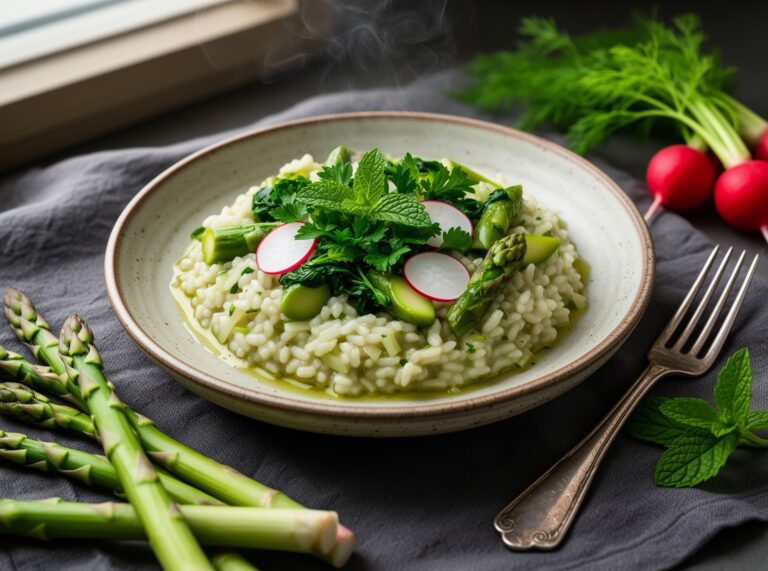
Vegan Spring Risotto — A refined expression of Lombardy’s culinary heritage.
Traditionally crafted with creamy arborio rice and crisp spring vegetables, this Gustoli-exclusive version is optimized for metabolic wellness and vibrant health.
Ready in 45 minutes, it seamlessly bridges authentic Italian tradition with modern nutritional excellence.
Beyond the Plate: The Story of Risotto Primavera Vegano
Mastering the Technique
A step-by-step guide to Italian perfection
The Artisan’s Pantry
Selecting the right components is 70% of the Italian culinary success. Here is what I’ve curated for this Risotto Primavera Vegano:
- 2 tablespoons Gustoli’s cold-pressed extra virgin olive oil — Choose a robust, fruity oil for a deeper base flavor.
- 1 medium, crisp Roman fennel bulb, finely diced — Dice finely to release its sweet anise aroma evenly.
- 2 plump cloves of organic garlic, finely minced — Use a microplane for an extra-fine texture that melts into the rice.
- 1 cup of premium, short-grain Arborio rice — Do not rinse; the starch is crucial for that signature creaminess.
- 4 cups of organic, low-sodium vegetable broth, warmed — Warming the broth ensures the risotto cooks evenly without cooling down the pan.
- 12 ounces of tender young asparagus spears and vibrant green beans, trimmed and cut into 1-inch segments — Blanch briefly before adding to retain their bright color and slight crunch.
- 2 cups of delicate baby arugula and fresh spinach, coarsely chopped — Add these at the very end to prevent overcooking and retain their peppery bite.
- ½ cup of crisp, thinly sliced heirloom radishes — Their peppery crunch provides a wonderful textural contrast when folded in just before serving.
- ¼ cup of fragrant, flat-leaf Italian parsley, finely chopped — Always use fresh parsley; dried lacks the vibrant aroma needed here.
- ¼ cup of fresh, aromatic mint leaves, finely chiffonaded — Mint offers a surprising freshness that elevates the spring flavors beautifully.
- A generous zest of one organic lemon — My personal Gustoli tweak to brighten the entire dish and add a wonderful aromatic lift.
The Culinary Workflow
-
The Aromatic Foundation
Warm your olive oil in a heavy-bottomed pan over medium heat. Add the finely diced fennel, stirring gently until it softens. Next, introduce the minced garlic, allowing it to cook for just a minute until fragrant.
Listen for the gentle sizzle as the fennel begins to soften. Watch for it to become translucent, not brown. The sweet, subtle aroma of anise will fill your kitchen, signaling the start of something truly special.
My shortcut here is patience. Do not rush this step. Building this aromatic base slowly sets the stage for a deeply flavorful risotto. It gives the dish its soul.
-
Toasting the Grains
Pour the Arborio rice into the pan with the softened aromatics. Stir continuously for about 2 minutes. Ensure every grain is coated in the oil and lightly toasted. This crucial process is called “tostatura.”
You will hear a faint, soft crackling sound as the rice toasts. The edges of the grains will become slightly translucent. Be careful not to let them brown, just a gentle toast.
Toasting the rice properly locks in its starches. This allows for a gradual release later, ensuring an even cook and that signature creamy texture. It is a small step with a big impact.
-
The Gradual Infusion
Begin adding the warm vegetable broth, one ladleful at a time, stirring constantly. Wait until each addition is almost fully absorbed by the rice before adding the next. Continue this process for about 15 minutes.
Watch as the risotto slowly expands and thickens. You will hear a gentle, rhythmic bubbling. The rice should remain slightly resistant, or “al dente,” at this stage, not mushy. This slow, deliberate process is central to the true art of authentic risotto.
My personal trick for perfect creaminess is consistent, gentle stirring. This friction releases the starch from the rice grains. It creates a natural, velvety emulsion without any dairy. Taste often to monitor the rice’s texture.
-
Integrating Spring’s Bounty
Once the risotto is about two-thirds of the way cooked, add your prepared asparagus and green beans. Continue adding broth and stirring. This allows the spring vegetables to cook just until tender-crisp.
The vibrant green of the vegetables will brighten the dish visually. They will maintain a slight bite, offering a delightful textural contrast to the creamy rice. This timing is key for maximum freshness.
For truly vibrant vegetables, I recommend blanching them briefly beforehand. This helps them retain their color and a pleasant crispness. It prevents them from becoming overcooked in the risotto. This keeps their natural goodness.
-
The Finishing Flourish
When the rice is perfectly al dente and the risotto has a beautiful, flowing consistency, remove the pan from the heat. Stir in the fresh baby arugula, spinach, thinly sliced radishes, parsley, mint, and that bright lemon zest. Allow it to rest for a moment, then serve immediately.
The aromas will blossom as the fresh herbs meet the warmth of the risotto. Taste for final seasoning adjustments, adding a pinch of flaky sea salt or freshly ground black pepper if needed.
A quick final stir off the heat is my secret for preserving the delicate freshness of the herbs. It prevents them from wilting too much. This ensures a burst of spring flavor with every spoonful. Consider it among our innovative vegetable main courses.
Alessia’s Expert Secrets
Achieving the perfect “all’onda” (wave-like) consistency is vital. The risotto should flow gently when you tip the pan, not sit stiffly. This comes from diligent stirring and gradually adding broth. A moment of rest off the heat also helps it settle into that luxurious creaminess.
To truly elevate this springtime delight, pair it with a crisp, dry white wine like a Vermentino or a light Pinot Grigio. For a non-alcoholic option, a sparkling lemon and mint infused water complements the fresh flavors beautifully. A simple side of lightly dressed green salad would also be perfect.
Recipe Insights & Tips
Why is Arborio rice essential for this dish?
Arborio rice is a short-grain Italian rice with a high starch content. This starch is key to achieving risotto’s characteristic creamy texture. As you stir, the grains rub against each other, releasing this starch and creating a rich, velvety sauce. Other rice varieties simply won’t yield the same result.
How does this fit into a Longevity diet?
This Vegan Spring Risotto is a fantastic example of healthy Italian eating. It’s packed with fiber, vitamins, and minerals from the fresh spring vegetables. The olive oil provides healthy monounsaturated fats. Being a vegan dish, it is naturally low in saturated fat and cholesterol. This makes it an excellent choice for optimizing for heart health and overall metabolic wellness, perfectly aligned with the Mediterranean diet principles.
Kcal
Wellness & Longevity Note
Each serving of this exquisite risotto offers a wholesome blend of plant-based goodness. Rich in dietary fiber, it supports healthy digestion and sustained energy. The vibrant spring vegetables provide a spectrum of antioxidants and essential micronutrients. This dish is a testament to how truly satisfying and nutritionally dense a meal can be, all while adhering to the principles of a longevity-focused lifestyle.