
Cappellacci di Zucca alla Ferrarese: The Golden Embrace of Autumn
Pumpkin Cappellacci di Ferrara — A refined expression of Emilia-Romagna’s culinary heritage.
Traditionally crafted with roasted butternut squash and aged Parmigiano Reggiano, this Gustoli-exclusive version is optimized for enhanced metabolic wellness.
Ready in 60 minutes, it seamlessly bridges authentic Italian tradition with modern nutritional excellence.
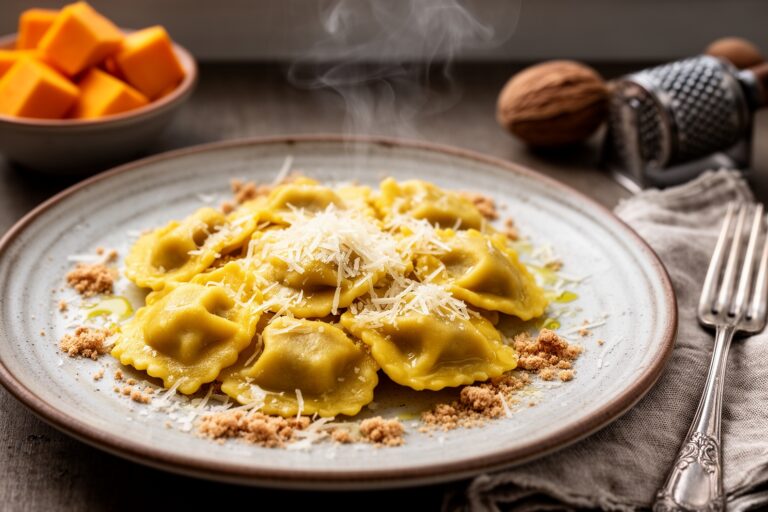
Beyond the Plate: The Story of Pumpkin Cappellacci di Ferrara
Mastering the Technique
A step-by-step guide to Italian perfection
The Artisan’s Pantry
Selecting the right components is 70% of Italian culinary success. Here is what I’ve curated for this Pumpkin Cappellacci di Ferrara:
- Silky Roasted Butternut Squash Puree: 250g, cooked until fork-tender and perfectly dry.
[Pro-Tip: Roast your squash in chunks, uncovered, until lightly caramelized. This deepens its sweetness and removes excess moisture, preventing a watery filling.] - Aged 24-month Parmigiano Reggiano: 80g, finely grated.
[Pro-Tip: Use authentic Parmigiano Reggiano. Its complex, nutty notes are irreplaceable. Grate it fresh just before mixing for maximum aroma.] - Freshly ground nutmeg from whole seeds: A generous pinch.
[Pro-Tip: Whole nutmeg, freshly grated, offers a far more aromatic and vibrant spice profile than pre-ground varieties.] - Crisp Amaretti Biscuits: 30g, finely crushed.
[Pro-Tip: These classic Italian almond cookies add a subtle sweetness and a delicate almond note, creating a signature Ferrarese flavor. Crush them finely to blend seamlessly.] - Italian “00” Flour: 300g, plus more for dusting.
[Pro-Tip: “00” flour gives pasta its silky texture. Sift it onto your work surface to create a mountain, ready for the egg well.] - Large Farm-Fresh Eggs: 3 units, at room temperature.
[Pro-Tip: Room temperature eggs incorporate more easily into the flour, yielding a smoother, more pliable dough.] - Fine Sea Salt: A delicate pinch, for the pasta dough.
[Pro-Tip: A tiny bit of salt enhances the dough’s flavor without making it salty. Remember, the filling is already savory.] - Unsalted Cultured Butter: 60g.
[Pro-Tip: Cultured butter, with its slightly tangy notes, brings a sophisticated depth to the simple sage sauce.] - Fresh Sage Leaves: 10-12 medium leaves.
[Pro-Tip: Select vibrant, unblemished sage leaves. Their earthy, peppery aroma is the perfect counterpoint to the sweet pumpkin.] - Reserved Pasta Cooking Water: About 1/2 cup.
[Pro-Tip: This starchy water is your secret weapon. It emulsifies with the butter to create a luscious, clinging sauce.]
The Culinary Workflow
-
1. The Golden Heart (The Filling)
Combine your perfectly roasted butternut squash puree, finely grated Parmigiano Reggiano, freshly ground nutmeg, and delicately crushed amaretti biscuits. Mix everything until a cohesive, rustic paste forms.
Feel the texture. It should be firm enough to hold its shape, yet soft and creamy. Notice the aroma of sweet squash and warm spice.
Alessia’s shortcut: For a truly velvety base, I pass the roasted squash through a fine-mesh sieve after roasting, before mixing with the other ingredients. This ensures an extra-smooth filling.
-
2. Building the Silken Dough
Pile sifted “00” flour onto your work surface, creating a well in the center. Crack farm-fresh, room-temperature eggs into this well, adding a delicate pinch of fine sea salt. Whisk the eggs gently, slowly incorporating flour from the inner walls.
As the mixture thickens, switch to your hands. Knead with purpose until the dough transforms from shaggy to smooth, elastic, and warm. It should have a beautiful golden hue.
Alessia’s shortcut: Wrap the finished dough tightly in cling film and let it rest for at least 30 minutes at room temperature. This vital step relaxes the gluten, making it much easier to roll paper-thin later.
-
3. Shaping the Ferrarese Jewels
Divide the rested dough into manageable portions. Dust your surface lightly, then roll each portion with a pasta machine until you reach a delicate, almost translucent sheet (setting 7 or 8 is ideal).
Lay the pasta sheets flat. Place small, walnut-sized spoonfuls of your golden pumpkin filling about 3-4 cm apart. Cover with another pasta sheet, pressing gently around each mound to seal and expel any air. Use a fluted pastry wheel to cut out distinct squares.
Alessia’s shortcut: To form the classic cappellacci, fold each square diagonally into a triangle. Then, gently bring the two pointed ends together and press them firmly, overlapping slightly at the base. This forms the elegant “little hat” shape that catches sauce beautifully.
-
4. The Buttery Embrace
Bring a large pot of generously salted water to a rolling boil. Carefully drop the cappellacci into the water; cook for only 2-3 minutes, or until they float and are perfectly al dente.
While the pasta cooks, melt the unsalted cultured butter in a wide skillet over medium heat. Add the fresh sage leaves. Listen for the gentle sizzle as the butter foams and the sage crisps, turning a light hazelnut brown.
Alessia’s shortcut: Just before draining, scoop out about 1/2 cup of the starchy pasta cooking water. Add a couple of tablespoons to your sage butter sauce in the skillet. This emulsifies the sauce, making it incredibly creamy and ensuring it clings beautifully to each delicate cappellaccio. Drain, then transfer pasta directly to the skillet and toss.
Alessia’s Expert Secrets
The secret to perfect cappellacci lies in two key elements: the pasta’s delicate thinness and the filling’s smooth, yet firm, consistency. Ensure your squash is deeply caramelized and dry before mixing. This prevents a watery filling and allows the pasta to cook evenly to an ideal al dente bite.
To elevate this dish, serve with a glass of dry, sparkling Lambrusco or a crisp, aromatic white wine like a Pignoletto from Emilia-Romagna. A simple green salad with a light vinaigrette provides a refreshing counterpoint to the richness of the pumpkin and butter.
Recipe Insights & Tips
Why is Butternut Squash essential for this dish?
Butternut squash is cherished in Ferrarese cuisine for its natural sweetness and creamy texture, which balances beautifully with the savory Parmigiano and the subtle bitterness of amaretti. It forms the tender “heart” of the cappellacci, giving them their characteristic golden hue and comforting flavor.
How does this fit into a Longevity diet?
This recipe, with its emphasis on whole ingredients, aligns perfectly with the principles of a Mediterranean-inspired longevity diet. Butternut squash provides ample fiber and essential vitamins (A and C), while Parmigiano offers high-quality protein and calcium. By making your own fresh, hand-rolled pasta, you control the quality and freshness of every component, reducing processed elements.
Kcal
Wellness & Longevity Note
This delightful Cappellacci di Zucca offers more than just exceptional taste; it’s a testament to nourishing traditions. The butternut squash is rich in beta-carotene, an antioxidant vital for vision and immune health. The modest addition of Parmigiano Reggiano provides probiotics and a concentrated source of protein and calcium. Incorporating whole, fresh ingredients and lean preparation methods, this dish supports gut health and overall metabolic balance, a true gem within Italian pasta dishes.