
Verdure Vive: The Roman Art of Italian Crudités with Zesty Lemon Emulsion
Italian Crudités — A refined expression of Lazio’s culinary heritage.
Traditionally crafted with vibrant seasonal vegetables and cold-pressed extra virgin olive oil, this Gustoli-exclusive version is optimized for gut health and vibrant energy.
Ready in 25 minutes, it seamlessly bridges authentic Italian tradition with modern nutritional excellence.
Beyond the Plate: The Story of Verdure Vive
Mastering the Technique
A step-by-step guide to Italian perfection
The Artisan’s Pantry
Selecting the right components is 70% of the Italian culinary success. Here is what I’ve curated for this Verdure Vive:
- Eight young or Thumbelina carrots — Pro-Tip: Scrub thoroughly but do not peel. Their skin holds vital nutrients and a rustic charm.
- Eight vibrant red and/or breakfast radishes — Pro-Tip: Trim the greens but leave a tiny stem for presentation. Slice thinly for a delicate crunch.
- Eight slender asparagus spears — Pro-Tip: Snap off the tough, woody ends by hand. They will break naturally where they are most tender.
- One crisp celery heart — Pro-Tip: Cut lengthwise into elegant wedges. The inner, paler stalks are most tender and flavorful.
- A quarter head of tender cauliflower, Romanesco, and/or broccoli — Pro-Tip: Break into small, bite-sized florets. Romanesco offers a beautiful, intricate texture.
- Two delicate baby fennel bulbs — Pro-Tip: Halve lengthwise, then slice into ¼-inch-thick strips. The subtle anise flavor is enchanting.
- Two fresh endives — Pro-Tip: Carefully separate the leaves. Their natural bitterness provides a wonderful contrast.
- Two heads of delicate Little Gem lettuces — Pro-Tip: Separate the leaves. These small, buttery leaves are perfect for scooping up the dressing.
- Four young spring onions — Pro-Tip: Trim roots and tough green ends, then halve lengthwise. Their mild oniony bite is delightful.
- Half a bunch of peppery watercress — Pro-Tip: Remove any tough stems. Its vibrant green and peppery notes add zing.
- Two ounces of slender haricots verts — Pro-Tip: Trim the ends precisely. These skinny French beans offer a satisfying snap.
- One organic, vibrant lemon — Pro-Tip: Reserve some zest before quartering for a final aromatic flourish.
- A generous pinch of flaky sea salt — Pro-Tip: Use Maldon or another high-quality sea salt for superior texture and flavor.
- One cup of exquisite cold-pressed extra virgin olive oil — Pro-Tip: Choose a reputable Italian oil, ideally from Puglia or Tuscany. This is the heart of your dressing; its quality shines through. For more on crafting exceptional dressings, explore our Italian sauces and condiments.
The Culinary Workflow
-
The Preparatory Symphony
Begin by meticulously washing and preparing all your vibrant vegetables. This means scrubbing the carrots and radishes, snapping the asparagus, and breaking the cauliflower, Romanesco, or broccoli into uniform florets. Precision in cutting ensures a beautiful presentation and consistent texture. Gather everything into separate bowls; this mise en place is key to a smooth workflow.
Visually inspect each piece. Look for bright colors and firm textures. The goal is to highlight the natural beauty of each vegetable, so ensure they are uniformly sized and impeccably clean. This initial stage sets the tone for the entire dish. I often hum a little tune as I do this; it’s a calming ritual before the cooking truly begins.
Alessia’s personal shortcut: Always have a large bowl of ice water ready before you begin trimming. This allows you to plunge blanched vegetables immediately, stopping the cooking process and preserving their crispness and brilliant color. This simple step makes a world of difference.
-
The Blanching Ballet
Next, bring a pot of lightly salted water to a rolling boil. You will gently blanch the asparagus spears and haricots verts for just 1-2 minutes until they turn bright green and are still firm to the bite. This quick dip enhances their color and tenderness without losing their crunch.
Watch for the intense color change – a vivid emerald green indicates they are perfectly blanched. Listen for the gentle hiss as you plunge them into the ice bath, a sound signaling the halt of cooking. This flash blanching ensures a delightful “al dente” texture, preventing them from becoming soggy.
Alessia’s personal shortcut: Blanch the green beans and asparagus separately to ensure optimal cooking for each. Never overcrowd the pot; this drops the water temperature too quickly and results in uneven cooking. Work in small batches if necessary, maintaining that rapid boil.
-
The Grand Assembly & Zesty Emulsion
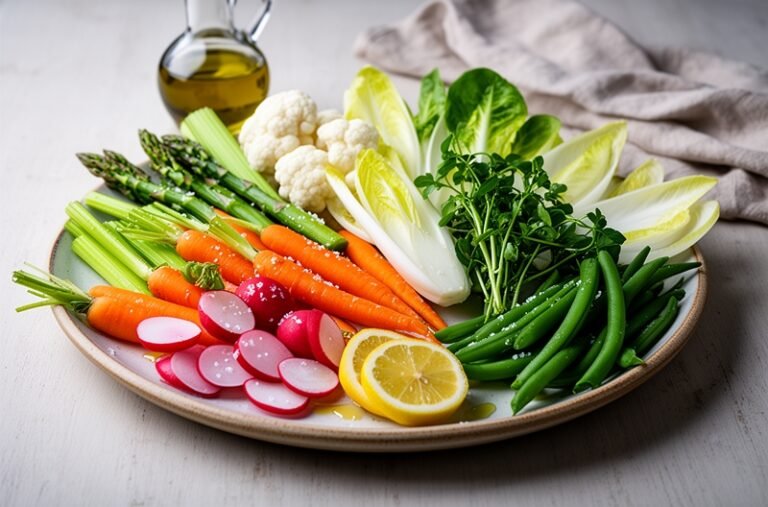
Drain your blanched vegetables completely. Now, arrange all your prepared crudités artfully on a large platter or individual plates. Think about color, height, and contrast. Place the lemon quarters strategically amongst the vegetables, inviting your guests to squeeze fresh juice over their selection. A generous sprinkle of flaky sea salt finishes the presentation.
Observe the vibrant tableau of colors and textures. The arrangement should be inviting, encouraging guests to reach for the different vegetable offerings. The sheen on the blanched greens, the natural blush of the radishes, the earthy tones of the carrots – all come together in a beautiful composition. The sound of a gentle crunch should be anticipated with every bite.
Alessia’s personal shortcut: For the zesty emulsion, combine the cold-pressed extra virgin olive oil with a generous squeeze of fresh lemon juice, a whisper of lemon zest, and a tiny pinch of flaky sea salt in a small bowl. Whisk vigorously until slightly emulsified. I personally find adding the zest directly to the oil infuses it with a more profound citrus aroma. Drizzle this vibrant concoction over the platter just before serving, or offer it in a small cruet for individual portions, allowing guests to customize their experience for a truly quick and healthy indulgence.
Alessia’s Expert Secrets
The key to perfect crudités is contrast. Ensure your raw vegetables are crisp and firm, while blanched items retain a slight bite. The immediate ice bath after blanching is non-negotiable for preserving that vibrant snap and color.
This dish shines with simplicity. Serve alongside a light, crisp Vermentino or a sparkling Prosecco. For a truly authentic experience, pair with a simple fresh burrata and a slice of crusty artisan bread, perhaps one from our collection of artisan Italian breads, to soak up any leftover lemon oil.
Recipe Insights & Tips
Why is high-quality extra virgin olive oil essential for this dish?
The olive oil isn’t just a dressing; it’s a foundational flavor. A superior cold-pressed extra virgin olive oil offers complex fruity, peppery, and grassy notes that truly elevate the simple vegetables, acting as a binding element for all the fresh flavors. It provides healthy monounsaturated fats crucial for nutrient absorption.
How does this fit into a Longevity diet?
This Verdure Vive platter embodies the core principles of the Mediterranean diet, focusing on nutrient-dense, plant-forward ingredients. It is naturally high in fiber, essential for gut health, and packed with vitamins, minerals, and antioxidants from the diverse array of fresh vegetables. The healthy fats from the olive oil support cardiovascular health, making it an excellent choice for a longevity-focused lifestyle.
Kcal
Wellness & Longevity Note
This Verdure Vive offers a profound nutritional impact. Each vegetable contributes a unique profile of vitamins (A, C, K), minerals (folate, potassium), and potent antioxidants, fighting cellular damage. The generous serving of fiber from the raw and lightly blanched vegetables aids digestion, promotes satiety, and supports a healthy gut microbiome. The robust monounsaturated fats from the extra virgin olive oil are crucial for heart health and can help reduce inflammation, making this dish a powerhouse for sustained wellness and vitality.