
The Rustic Rhapsody: Herbed Orzo with Sweet Italian Sausage and Golden Raisins
Herbed Orzo with Italian Sausage and Raisins — A refined expression of Lazio’s culinary heritage.
Traditionally crafted with sweet Italian pork sausage and delicate orzo, this Gustoli-exclusive version is optimized for balanced nutrition and comforting indulgence.
Ready in 55 minutes, it seamlessly bridges authentic Italian tradition with modern nutritional excellence.
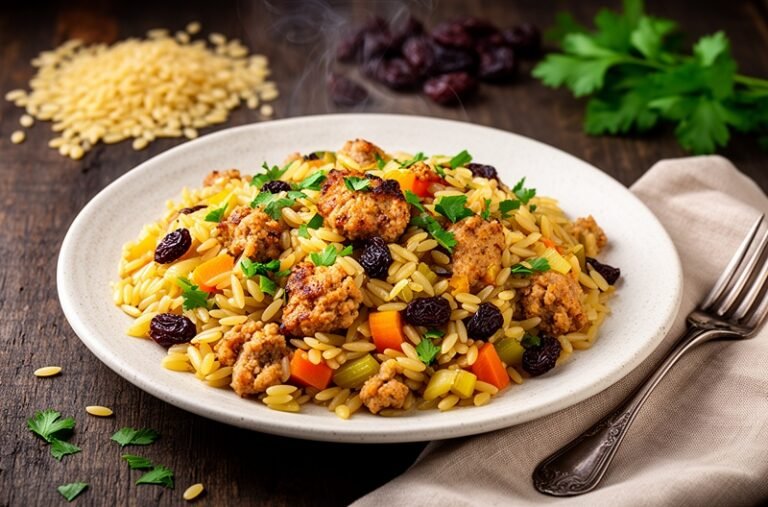
Beyond the Plate: The Story of Herbed Orzo with Sweet Italian Sausage and Golden Raisins
Mastering the Technique
A step-by-step guide to Italian perfection
The Artisan’s Pantry
Selecting the right components is 70% of the Italian culinary success. Here is what I’ve curated for this Herbed Orzo with Sweet Italian Sausage and Golden Raisins:
- One and a half cups of artisanal bronze-die extruded orzo pasta — [Pro-Tip: Choose a high-quality brand for superior texture and flavor absorption, preventing it from clumping.]
- A generous tablespoon of cold-pressed extra virgin olive oil — [Pro-Tip: Use a robust, fruity oil for deep flavor; it forms the foundation of your dish.]
- Six prime sweet Italian pork sausages, casings removed — [Pro-Tip: Seek out artisan-made sausages with high-quality pork. Removing casings allows for better browning and crumble.]
- One large, finely diced golden yellow onion — [Pro-Tip: Dice uniformly for even caramelization. This is your aromatic bedrock.]
- Two medium, finely diced vibrant carrots — [Pro-Tip: Sweetness from carrots balances the savory sausage. Cut them small so they melt into the sauce.]
- Three crisp celery stalks, finely diced — [Pro-Tip: Celery adds an essential aromatic depth to your soffritto. Ensure no fibrous strings remain.]
- A full tablespoon of fragrant dried oregano, preferably Sicilian — [Pro-Tip: Rub the dried oregano between your palms before adding to release its essential oils and intensify its perfume.]
- Half a tablespoon of earthy dried thyme leaves — [Pro-Tip: Thyme pairs beautifully with pork. Use dried for a more concentrated flavor profile.]
- Half a tablespoon of delicate dried marjoram — [Pro-Tip: Marjoram is a milder, sweeter cousin to oregano, adding a gentle herbal whisper to the dish.]
- A half teaspoon of flaky Kosher sea salt, plus more to taste — [Pro-Tip: Salt in layers to build flavor from the beginning. Kosher salt provides controlled seasoning.]
- A quarter cup of plump, sun-dried golden raisins — [Pro-Tip: Plump your raisins in warm water for 5 minutes if they seem too dry. This rehydrates them and enhances their natural sweetness.]
- A quarter cup of freshly chopped Italian flat-leaf parsley — [Pro-Tip: Add fresh parsley at the very end to preserve its bright, clean flavor and vibrant green color.]
The Culinary Workflow
-
Crafting the Savor: Browning the Sausage
Begin by removing the casings from your artisanal Italian pork sausages. Place the meat into a wide, heavy-bottomed pan or Dutch oven with a tablespoon of premium cold-pressed extra virgin olive oil over a medium-high flame. Break up the sausage with a wooden spoon as it cooks.
Listen for the sizzle, a confident sound that tells you the pan is hot enough. Watch for the sausage to transform, developing a deep, mahogany crust. This golden-brown caramelization is where all the foundational flavor resides.
My trick for an intensely flavorful base is to really press the sausage down into the pan with the back of your spoon for a minute or two, creating those beautiful browned bits. Don’t rush this step; it’s the heart of the dish. This rich start is crucial, much like building the perfect foundation for our robust Italian meat dishes.
-
Building the Aromatic Foundation: Soffritto Perfection
Once the sausage is beautifully browned, use a slotted spoon to transfer it to a plate, leaving behind any rendered fat in the pan. Add your finely diced golden yellow onion, vibrant carrots, and crisp celery to the same pan. Sauté gently.
The vegetables will soften and become translucent, releasing a sweet perfume. You’ll hear a gentle whisper rather than a harsh sizzle. Let them cook until they are tender and slightly golden, not browned. This can take 8-10 minutes.
The secret to a perfect soffritto is patience and low heat. If the pan seems dry, add a tiny splash of water to deglaze and scrape up all those flavorful fond bits from the sausage. This adds incredible depth, a technique vital in our foundational Italian sauces.
-
Infusing the Herbs and Orzo
Return the browned sausage to the pan with the softened vegetables. Add the fragrant dried oregano, earthy dried thyme, and delicate dried marjoram. Stir well, letting the herbs bloom in the warm fat for about a minute. Now, introduce the artisanal orzo pasta, stirring it constantly for two minutes.
The kitchen will fill with an intoxicating aroma as the herbs awaken. The orzo will slightly toast, developing a subtle nutty scent and a faint sheen, indicating it’s ready to absorb liquids.
Toasting the orzo briefly before adding liquid creates a nuttier flavor and helps it maintain its shape, preventing it from becoming mushy. It’s a trick I learned from a master pastaio when making our curated artisanal pasta collection.
-
The Simmer and Sweet Revelation
Pour in about 3 cups of hot water or low-sodium chicken broth, ensuring the orzo is just covered. Add the flaky Kosher sea salt and the plump golden raisins. Bring to a gentle simmer, then reduce the heat to low, cover the pan, and cook for 10-12 minutes, stirring occasionally.
The liquid will slowly be absorbed by the orzo, which will swell and soften. The raisins will plump up, releasing their subtle sweetness into the savory mix. Test a piece of orzo for a perfect al dente bite.
Always use hot liquid! It keeps the cooking process continuous and ensures the orzo cooks evenly. If it’s too thick, add another splash of hot water. The goal is a creamy, not soupy, consistency.
-
The Harmonizing Finish
Once the orzo is al dente and most of the liquid has been absorbed, remove the pan from the heat. Stir in the freshly chopped Italian flat-leaf parsley. Taste and adjust seasoning with additional salt or freshly ground black pepper if needed.
The vibrant green parsley will brighten the dish visually and aromatically, adding a fresh counterpoint to the rich, savory flavors. The dish should feel cohesive, with every ingredient playing its part.
A final drizzle of fresh extra virgin olive oil just before serving can elevate the entire dish, adding a luxurious finish and enhancing the herbal notes. Sometimes, I add a touch of lemon zest here for an extra spark.
Alessia’s Expert Secrets
The key is to achieve perfectly al dente orzo that retains a slight chew, surrounded by a rich, savory, yet not heavy, sauce. Cooking it covered on low heat ensures even absorption and prevents sticking. Don’t overcook, or the orzo will become gummy.
This rustic dish sings beautifully alongside a medium-bodied red wine, such as a Chianti Classico or a Montepulciano d’Abruzzo. For a side, a simple arugula salad dressed with lemon and a sprinkle of Parmesan provides a fresh, peppery counterpoint.
Recipe Insights & Tips
Why is Sweet Italian Pork Sausage essential for this dish?
The sweet Italian pork sausage provides a foundational depth of savory, slightly sweet, and herbaceous flavor that permeates the entire dish. Its fat renders into the pan, creating a rich base for the soffritto, and the crumbled meat adds a satisfying texture and protein. It’s truly the soul of this orzo preparation.
How does this fit into a Longevity diet?
This dish is a beautiful example of how comforting Italian food can align with a longevity diet. It features lean protein from the pork sausage, complex carbohydrates from the orzo for sustained energy, and a significant boost of fiber and vitamins from the finely diced vegetables. The use of cold-pressed extra virgin olive oil provides healthy monounsaturated fats, and the abundance of herbs offers potent anti-inflammatory and antioxidant properties, making it an excellent choice for our collection of immuno-supportive recipes.
Kcal
Wellness & Longevity Note
This Herbed Orzo with Sweet Italian Sausage and Golden Raisins offers a robust profile of macro and micronutrients. The sweet Italian pork sausage provides a significant source of high-quality protein and essential B vitamins, while the orzo delivers complex carbohydrates for sustained energy release. The generous inclusion of carrots, celery, and onion contributes vital fiber, vitamins A and C, and a host of phytonutrients. Oregano, thyme, and marjoram are not just flavor enhancers; they are powerful antioxidants. The golden raisins, in moderation, add natural sweetness and a touch of iron. Prepared with a discerning hand, this recipe embodies the Mediterranean diet’s emphasis on whole foods, lean proteins, and an abundance of plant-based ingredients, supporting metabolic balance and overall well-being.