
The Roman Baker’s Secret: Crusty, Aromatic Pane Casereccio
Authentic Italian Bread Recipe — A refined expression of Lazio’s culinary heritage.
Traditionally crafted with finest Italian ’00’ flour and active dry yeast, this Gustoli-exclusive version is optimized for enhanced digestive wellness.
Ready in 2 hours 55 minutes, it seamlessly bridges authentic Italian tradition with modern nutritional excellence.
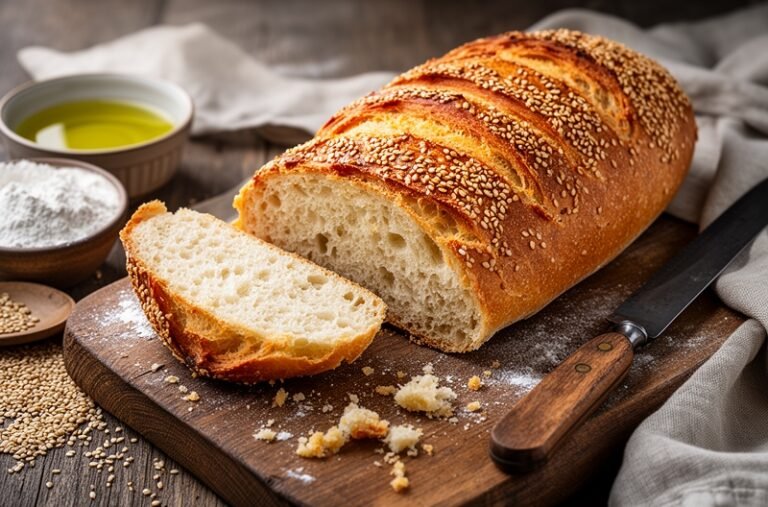
Beyond the Plate: The Story of Roman Pane Casereccio (Rustic Bread)
Mastering the Technique
A step-by-step guide to Italian perfection
The Artisan’s Pantry
Selecting the right components is 70% of the Italian culinary success. Here is what I’ve curated for this Roman Pane Casereccio (Rustic Bread):
- 120ml organic whole milk — [Pro-Tip: Ensure it’s gently warmed, not hot, to activate the yeast perfectly.]
- Two 7g sachets premium active dry yeast — [Pro-Tip: Always check the expiration date; fresh yeast is key to a lively rise.]
- A delicate pinch (1/2 tsp) of fine cane sugar, plus 3 generous tablespoons, divided — [Pro-Tip: The initial pinch “wakes up” the yeast, while the larger portion nourishes it during fermentation.]
- 475ml warm, purified water — [Pro-Tip: The ideal temperature is around 105-115°F (40-46°C) – think warm bath water, not scalding.]
- 60ml cold-pressed extra virgin olive oil from Lazio, plus extra for kneading and coating — [Pro-Tip: A high-quality olive oil imparts a subtle fruitiness and contributes to a tender crumb. For other uses, explore our exquisite Italian sauces and condiments.]
- 15g coarse sea salt from Trapani — [Pro-Tip: Distribute the salt evenly to enhance flavor throughout the dough, but avoid direct contact with yeast initially.]
- 720g finest Italian ’00’ flour, plus additional for dusting and preparation — [Pro-Tip: Using ’00’ flour yields a finer texture, but a good quality bread flour also works beautifully for a chewier crust.]
- 4 tablespoons toasted golden sesame seeds, divided (optional) — [Pro-Tip: Toasting the seeds beforehand intensifies their nutty aroma and adds a delightful crunch to the crust.]
The Culinary Workflow
-
Awakening the Leaven
Gently warm the organic whole milk to a lukewarm temperature and combine it with the premium active dry yeast and the delicate pinch of fine cane sugar in a large mixing bowl. Stir lightly to combine these vital ingredients.
Watch for the yeast to bloom—it will become visibly foamy and release a wonderfully fragrant, yeasty aroma within 5 to 10 minutes. This effervescent fizz signals that your yeast is alive and ready to work its magic, giving your bread its lift.
If your kitchen environment is a bit cool, I have a little trick: place the bowl in a slightly warmer spot, perhaps near a sunny window or above a pilot light, to encourage faster activation. This small adjustment can significantly shave off rising time without compromising quality.
-
The Heart of the Dough
Introduce the warm, purified water, the cold-pressed extra virgin olive oil, the coarse sea salt from Trapani, and the remaining 3 tablespoons of cane sugar to your active yeast mixture. Begin incorporating approximately three cups of the finely milled ’00’ flour, mixing until just combined.
As you combine these elements, the mixture will gradually transform. It will transition from a shaggy, loose mass into a more cohesive, albeit still sticky, dough. You can feel the flour absorbing the liquids, beginning the transformation.
My personal rule is never to rush adding the remaining flour. Integrate it gradually, perhaps a quarter cup at a time, until the dough just begins to clear the sides of your mixing bowl. This prevents the common pitfall of over-flouring, which can result in a disappointingly dry, dense loaf. This is a crucial step for all our collection of artisan Italian breads.
-
The Kneading Ritual
Turn the nascent dough out onto a lightly floured surface. Now, begin the rhythmic kneading process, pushing and folding the dough over itself. Continue this for 8 to 10 minutes, systematically developing its vital gluten structure.
Listen for the satisfying slap of the dough against your countertop; it’s a sign of its increasing elasticity. Feel it transform from rough and sticky to smooth, wonderfully elastic, and truly springy under your hands. It should feel alive.
I often use what bakers call the “windowpane test.” Pinch off a small piece of dough and gently stretch it between your fingers. If you can stretch it thin enough to see light through it without it tearing, your gluten is perfectly developed. A few extra minutes of diligent kneading can make all the difference in the final texture.
-
Shaping the Soul of the Loaf
Gently deflate the risen dough, releasing the accumulated gases that have built up during its first fermentation. Carefully transfer it to a lightly floured surface and shape it into your desired loaf form. Whether you choose a traditional oblong batard or a classic round boule, focus on creating even tension.
The dough should feel remarkably soft and airy, yielding easily to your delicate touch. As you shape it, you’ll sense the internal tension building, which is essential for giving the loaf its magnificent structure and preventing it from spreading too much.
For a truly rustic, deeply crusted exterior, I have a simple yet effective technique: spritz the shaped loaves lightly with warm water just before the second rise. This helps to create a better “oven spring” during baking and ensures a wonderfully crisp, flavorful crust, much like a good delicate focaccia.
-
The Grand Finale: Baking
Preheat your oven to a robust 425°F (220°C), ensuring a consistently high heat. Carefully slash the top of each loaf with a sharp, clean blade – a baker’s lame works best – allowing for controlled expansion and an artful design. Transfer the loaves to your prepared baking sheet.
The moment the bread is introduced to the searing heat of the oven, you will hear a subtle sizzle. Soon, your kitchen will fill with the intoxicating, faint aroma of toasting flour and developing crust. Watch as the exterior slowly deepens to a beautiful golden-brown, promising perfection.
For an incredibly crusty exterior, a secret I learned from Roman bakers: place a shallow pan of hot water on the bottom rack of your oven during the first 10 to 15 minutes of baking. The steam created keeps the crust supple, allowing for maximum expansion before it sets, just like creating the perfect authentic Roman pizza dough.
Alessia’s Expert Secrets
To achieve that quintessential Italian bread texture—a crisp crust giving way to an airy, chewy interior—always ensure your oven is fully preheated. The initial blast of high heat is crucial for the “oven spring” and crust development. A pan of water for steam also aids this.
This Pane Casereccio is magnificent on its own, but it truly shines alongside a robust extra virgin olive oil for dipping. For a light lunch, pair it with fresh burrata and ripe tomatoes, or use it to sop up the delicious juices from a hearty ragù. It is the perfect vessel for many Italian delights.
Recipe Insights & Tips
Why is ’00’ flour essential for this dish?
Italian ’00’ flour is a finely milled wheat flour with a lower protein content than typical bread flour, yet it’s ideal for this recipe. It creates a remarkably soft, tender crumb with a delicate, fine texture, which is characteristic of authentic Roman bread. While bread flour can be used, ’00’ flour truly elevates the experience, giving that authentic light chew.
How does this fit into a Longevity diet?
This Pane Casereccio aligns beautifully with the Mediterranean diet’s principles, emphasizing whole grains (especially when using high-quality flour), healthy fats from olive oil, and minimal processed ingredients. The extended fermentation may also improve nutrient bioavailability and digestibility, supporting gut health—a cornerstone of a longevity-focused lifestyle.
Kcal
Wellness & Longevity Note
Our Pane Casereccio is crafted with mindful ingredients. Each serving offers sustained energy from complex carbohydrates, heart-healthy monounsaturated fats from premium olive oil, and essential minerals. The simplicity of its composition, coupled with the slow fermentation, makes it a nourishing choice that supports overall well-being and is suitable for various dietary needs, including vegetarian and egg-free preferences. It’s a testament to how wholesome ingredients, thoughtfully prepared, contribute to a vibrant, healthy life.